


Automotive engineers and original equipment manufacturers: Understanding air fuel ratios is critical to optimizing your product’s engine.
Without the right air fuel ratio, the calibration, development, tuning, and exhaust systems can suffer from poor performance, excessive pollutant output, and, at worse, become the subject of regulatory environmental compliance audits. But, at best, understanding air-fuel ratios can help empower engine research and development teams to create eco-friendly products that support a greener, cleaner environment.
Curious to learn how?
Hi, we’re GlobalMRV, a team of Ph.D. researchers, managers, analysts, engineers, and technicians driven to reduce the environmental footprint of internal combustion-engine-powered (ICE) equipment and automobiles. For more than 20 years, we’ve advised companies and helped run more than 60 different types of diagnostic tests to support over 100 different vehicles and engines for overall emissions reduction and fuel calibration testing.
If you’re looking to understand the connection between air-fuel ratios (AFR) and how 21st-century engine development and vehicle emissions technology can help you optimize AFRs, you’ve come to the right place.
In this article, we’ll walk you through a variety of air-fuel ratio-related topics, such as:
- What happens in an engine with AFR, and how the events in an engine are driven by its air-fuel ratio (AFR)
- Stoichiometric ratio, and rich & lean mixtures
- The importance of lambda (λ) for comparing different fuels
- How an engine control unit (ECU) uses sensors to control the air-fuel mixture
- Why gasoline and diesel operate in a different way
- How AFR affects vehicle emissions and exhaust emissions
- What AFR looks like through a typical driving event
- AFR, on-board diagnostic (OBD) data and portable emissions measurements
- Understanding how AFR works with emissions measurements
- 10 AFR mistakes to avoid
- The importance of a global sustainability consultant in determining cleaner engine development
What is air-fuel ratio, and what happens with it in an engine?
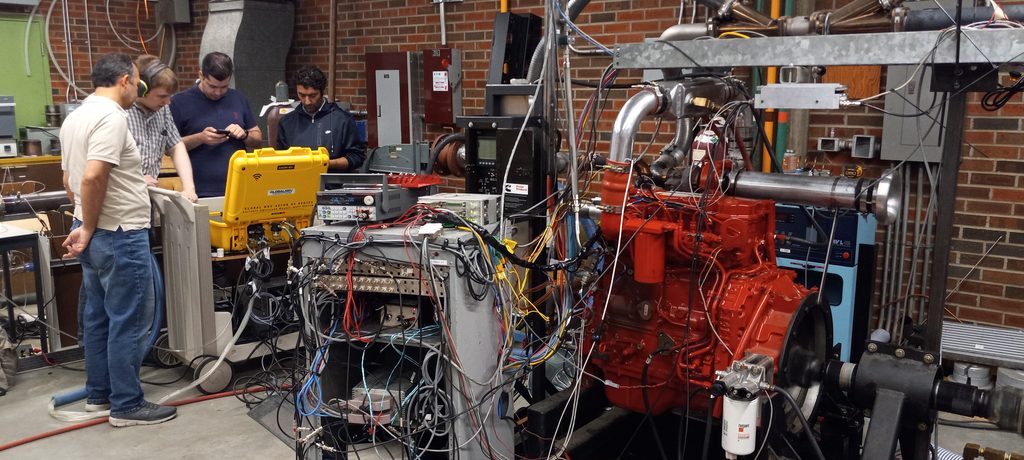
So, what happens in an engine, and what’s the relationship between the air-fuel ratio and how the engine works? Most gasoline and diesel engines burn fuel using oxygen from the air.
Air enters the engine, fuel is added, the mixture reacts during combustion, and the resulting gases leave through the exhaust. The amount of air compared with the amount of fuel is important to industry professionals because the air-fuel mixture influences power, efficiency, exhaust temperature, aftertreatment operation, and pollutant formation.
Air-fuel ratio (AFR) describes the mass of air supplied divided by the mass of fuel supplied. It’s a mass ratio, not a volume ratio.
For example, an AFR of 14.7 parts air to one part fuel (14.7:1) means approximately 14.7 kilograms of air for every 1 kilogram of gasoline fuel exists (or the same ratio using units of grams).
AFR = mass of air ÷ mass of fuel. Example: 147 g of air ÷ 10 g of fuel = 14.7:1.
Stoichiometric ratio, & rich and lean air-fuel mixtures

Another topic pertaining to air-fuel ratios that’s worth mentioning is stoichiometry. The theoretical amount of oxygen needed to fully oxidize the fuel, based on its chemistry, is what we call a stoichiometric mixture.
For typical gasoline, a commonly taught approximation is 14.7:1 by mass; with that being said, the actual value changes with fuel composition, ethanol content, and other factors.
We mention stoichiometric air-fuel mixtures as they are a chemical reference point, not a guarantee of complete real-world combustion, but one that can be used nevertheless to determine air-fuel mixtures.
Let’s take a look at a handful of mixtures and their meanings to better understand the relationship between AFR and stoichiometric.
| Mixture | Air-fuel ratio (AFR) compared to stoichiometric | Takeaway message |
| Stoichiometric | Air-to-fuel ratio is equal | Air and fuel are balanced against theoretical oxygen demand |
| Rich air-fuel mixture | Lower AFR (for example, 12.5:1 gasoline) | More fuel relative to airLess oxygen available per unit of fuel |
| Lean air-fuel mixture | Higher AFR (for example, 16:1 gasoline) | More air relative to fuel (excess oxygen exists)Oxygen remains available |
📝Note: A lower AFR number means the mixture is richer. A higher AFR number means the mixture is leaner. The numerical AFR reference depends on the type of fuel used. In other words, we would not apply the 14.7:1 number universally to fuels like diesel, ethanol blends, natural gas, or hydrogen.
Lambda (λ): A clearer way to compare fuels

Similar to stoichiometric is a term we call lambda. Lambda is a term that helps us understand the air-fuel ratio of a particular mixture. Lambda (λ) is the actual AFR divided by the stoichiometric AFR for the fuel being used.
The lambda value can help us come to specific conclusions about particular AFRs.
- lambda = 1 means stoichiometric
- lambda < 1 means the air-fuel mixture is rich
- lambda > 1 means the air-fuel mixture is lean
Because lambda is normalized to the fuel, it’s often more useful than raw AFR when comparing fuels. Let’s take a look at how we would calculate lambda and what said results indicate:
| Example of an air-fuel ratio | Lambda (λ) calculation | What the calculation means |
| An air-fuel ratio of 14.7 | 14.7 ÷ 14.7 = 1.00 | This air-fuel mixture is stoichiometric. |
| An air-fuel ratio of 12.5 | 12.5 ÷ 14.7 ≈ 0.85 | This air-fuel mixture is rich. |
| An air-fuel ratio of 16.2 | 16.2 ÷ 14.7 ≈ 1.10 | This air-fuel mixture is lean. |
For example, a gasoline engine with AFR 13.2 has a lambda of approximately 0.90 (13.2 ÷ 14.7 ≈ 0.90). As such, this mixture is rich.
Engine management: How does an engine control the air-fuel mixture
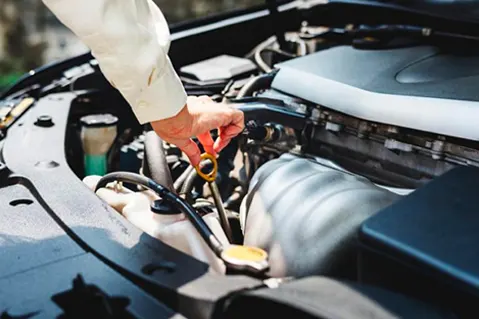
The engine control unit (ECU) uses sensors and models to estimate incoming air and command fuel injection. Depending on the engine, important inputs include mass air flow (MAF), manifold pressure (MAP), intake temperature, throttle position, engine speed, and exhaust oxygen or air–fuel sensors.
As such, an engine controls the air-fuel mixture in the following ways:
- Fuel injectors meter fuel: The ECU adjusts pulse duration and sometimes injection timing and pressure.
- A narrowband oxygen sensor tends to indicate which side of stoichiometric the exhaust is on. A wideband air-fuel sensor can support measurement over a broader lambda range.
- Closed-loop control uses sensor feedback to correct fueling. Open-loop operation relies more heavily on calibrated commands and models.
- Short- and long-term fuel trims: They act as ECU corrections, not direct laboratory measurements of the flow of fuel.
A sensor reading doesn’t always provide a direct measurement of the complete cylinder mixture. As such, exhaust leaks, sensor faults, transient delays, engine misfires, and engine calibration assumptions can also complicate the make-up and interpretation of the air-fuel mixture.
Comparing the AFR of gasoline and diesel fuels
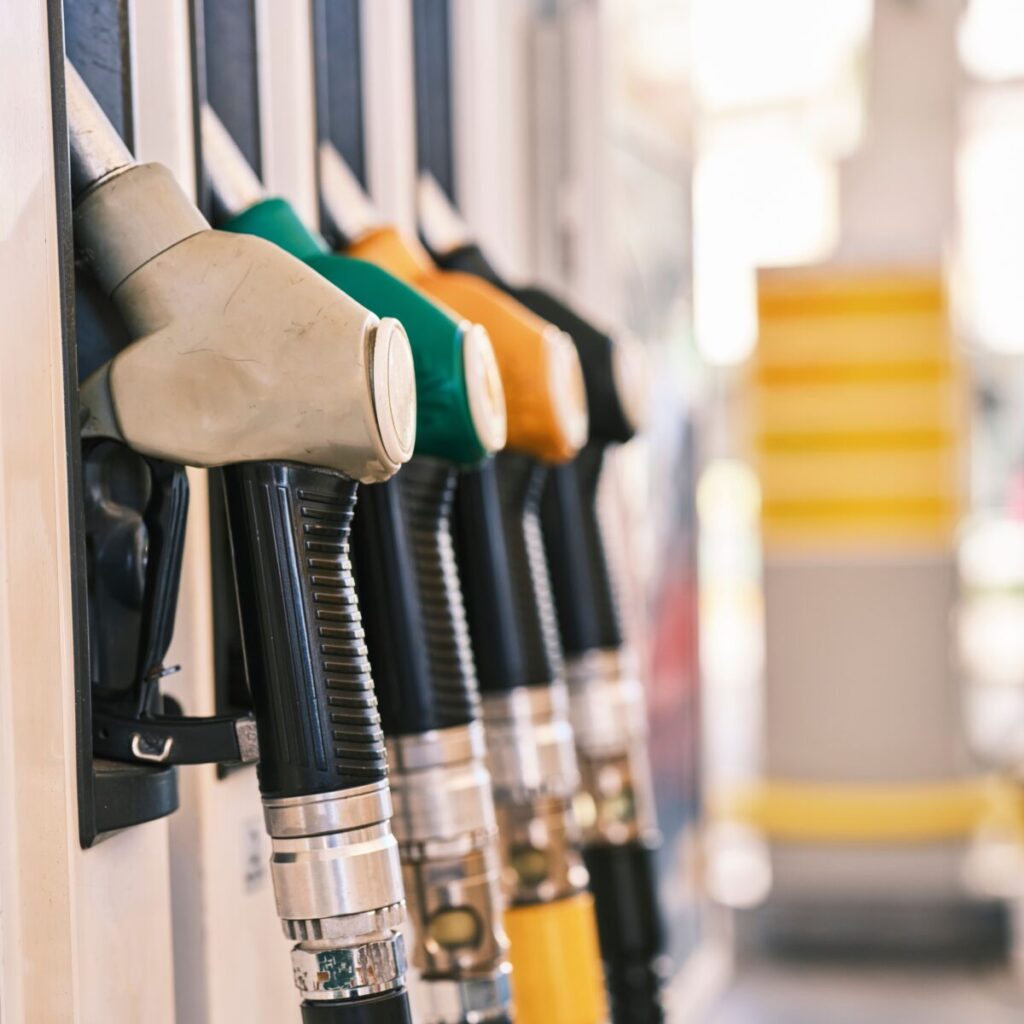
Some of the most common fuels referenced for engine development and research include gasoline and diesel.
- Gasoline spark-ignition engines: Many conventional gasoline engines target lambda near 1 during warmed-up, normal operation. A three-way catalyst can simultaneously reduce nitrogen oxides (NOx) and oxidize carbon monoxide (CO) and hydrocarbons. Rich air-fuel operation may occur during high-load protection or certain transients. A handful of gasoline designs use lean operation in specific modes.
- Diesel compression-ignition engines: Diesel engines typically operate with excess air overall (lambda > 1). As such, diesel engines control an engine’s load mainly through fuel delivery rather than throttling the air-fuel mixture to stoichiometric. Diesel exhaust aftertreatment may include diesel oxidation catalyst (DOC), diesel particulate filter (DPF), and selective catalytic reduction (SCR) systems. Overall exhaust lambda doesn’t capture every local rich or lean region within an engine cylinder.
Table: How air fuel ratios affect an engine’s emissions output
| Emission type | Connection to air-fuel ratios | Why caution should be exercised with air fuel ratios and engine/exhaust emissions |
| Carbon monoxide (CO) | CO often rises during rich or incomplete combustion. | Catalyst performance, temperature, and transients matter. |
| Hydrocarbons (HC) | HC can rise with incomplete combustion or misfire. | Very rich or very lean combustion can cause poor burning. |
| Nitrogen oxides (NOx) | NOx depends strongly on temperature, oxygen, and combustion conditions. | Not a simple “lean always means high NOx” rule; aftertreatment changes tailpipe values. |
| Carbon dioxide (CO₂) | CO₂ reflects carbon oxidation and fuel use. | Concentration alone doesn’t constitute fuel economy or total CO₂ mass. |
| Particulate matter (PM) and particulate number (PN) | PM and/or PN can increase with locally fuel-rich combustion and select conditions. | Fuel type, injection, engine design, and aftertreatment are critical to understanding how AFR affects emissions output. |
📝Note: A misfire can send unburned oxygen and fuel into the exhaust of a vehicle. As such, you might see that an oxygen sensor may report a lean-looking condition even when the root cause is failure to burn the mixture (rather than insufficient injected fuel).
What does an air-fuel ratio look like during a typical driving event

Many people wonder what an air-fuel ratio looks like during real-driving emissions (RDE) testing events. Let’s take a look at some of the most common driving events and what AFR looks like in each.
- Cold start: Fuel and spark strategies support the engine start-up and catalyst warm-up. Emission levels may be elevated before aftertreatment reaches its operating temperature.
- Vehicle idling and light cruise: Many gasoline engines regulate near lambda 1 once the engine is warm. Diesel-operating engines typically remain lean overall.
- Hard acceleration: During a hard acceleration, the load on the engine rises. Gasoline enrichment may be used depending on the design and operating conditions of the engine.
- Deceleration fuel cut: Fuel injection may pause, making exhaust oxygen high and reported lambda very lean.
- Return to acceleration: When an engine begins accelerating again, fueling resumes. The responses from sensors, combustion patterns, and aftertreatment may lag.
💡Quick tip: When reviewing a graph of AFR during a typical driving event, make sure to align engine load, revolutions per minute (RPM), throttle, vehicle speed, lambda, AFR, exhaust flow, the catalyst temperature (if it’s available), and measurements of pollutants, all on the same time axis.
How do portable emissions measurement systems (PEMS) support our understanding of engine performance?
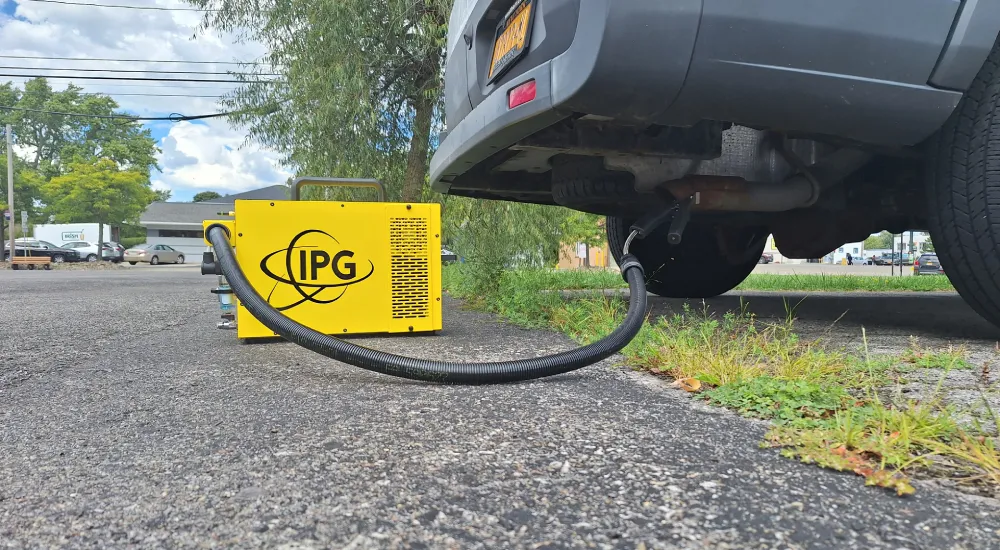
If you haven’t yet heard of portable emissions measurement systems (PEMS), they’re a crucial component needed to understand how air-fuel ratios work for engine calibration and development.
PEMS measures selected exhaust constituents under real operating conditions. When synchronized with engine and vehicle data, PEMS provide real-time emissions measurements for real-driving emissions (RDE) testing.
These RDE testing-related measurements help engineers investigate when and under what operating conditions changes occurred. So, while an AFR or lambda signal is one piece of evidence on the nature of an air-fuel mixture, it doesn’t diagnose how the air-fuel mixture affects an engine and its emissions output. A PEMS system can, though.
For example, our Axion and Firefly equipment can support emissions development and diagnostic investigations. Using PEMS, stakeholders can collect relevant emissions and operating data with the engine’s configuration, available channels, and interfaces in mind.
For example, engineers can compare any of the following air-fuel phenomena using PEMS:
✅Compare a rich transient with CO/HC behavior
✅Investigate NOx events during changing load
✅Review the emissions response to a suspected misfire
✅And more
Let’s take a look at what types of air-fuel mixtures are determined, assessed, and understood by using PEMS.
PEMS case study: Acceleration event and air-fuel analysis
Here’s the scenario: during a warmed-up gasoline vehicle test, a driver accelerated hard. On-board diagnostics (OBD) reported that lambda fell from about 1.00 to 0.88. What’s more, the research team found that synchronized CO trace increased shortly afterward.
Here’s what the team determined:
- What the team observed: The reported mixture became richer during the acceleration.
- Their hypothesized reason for the mixture becoming richer: The ECU may have commanded the air-fuel mixture to become richer under the high load, and richer combustion or catalyst conditions may have contributed to the CO increase.
- The facts and figures that the team needed to verify using PEMS: The team verified throttle, engine load, RPM, commanded versus measured lambda, exhaust/catalyst temperature, exhaust flow, and sensor time alignment.
- What the team learned they could not conclude: The team learned that a single driving event doesn’t prove a defective engine, failed catalyst, or regulatory noncompliance issue.
Thanks to portable emissions measurement systems, the team was able to better understand how the engine responded under hard acceleration.
Common mistakes to avoid with rich or lean AFR

One of the best ways to understand the impact of air-fuel ratios, whether rich or lean, is by understanding what AFR doesn’t tell us about engines and engine management systems. As you and your team discuss AFR for fuel delivery and fuel optimization, we recommend avoiding the following AFR-related points:
- Naming “14.7:1” the stoichiometric AFR for every fuel type
- Using the terms “lambda” and “equivalence ratio” interchangeably. “Lambda > 1” means that a mixture is lean, whereas “equivalence ratio > 1” means a mixture is rich.
- Assuming a high exhaust oxygen signal always means the electronic control unit (ECU) commanded a lean mixture.
- Making interpretations about tailpipe pollutant concentrations without considering exhaust flow and aftertreatment as part of the picture.
- Treating the calculated values from OBD as certified reference measurements. Always make sure to validate the numbers.
- Assuming that a “rich” mixture always causes NOx to decrease, or assuming that a “lean” mixture always causes NOx to increase, that is, in all engines and driving conditions.
While we’ve only scratched the surface of what air-fuel mixtures are and what they tell us about driving events & behaviors, there’s so much more to learn, especially as AFRs relate to exhaust emissions output.
Curious to learn more?
If you’re looking to understand how your engine’s air-fuel make-up affects your emissions output, we’d love to help. Our sustainability consultants for vehicles and heavy equipment operations would be more than happy to help you understand how to optimize operational efficiency and meet emissions standards to help you stay in compliance with regulatory bodies and environmental legislation.
For more information about how to understand air-fuel ratios, their impact on engine development, and emissions testing, we invite you to get in contact with us. We’d be happy to help create a personalized roadmap for how to optimize each air-fuel mixture to better meet your company’s needs and project demands.
To learn more about how our team can support you and your operation with more sustainable solutions for your team and its products, contact us today.
GlobalMRV: Efficient and Comprehensive Engine Emissions Testing Data for Teams Large and Small