


Lab technicians, vehicle engineers, and original equipment manufacturers (OEMs): Sometimes, the planet’s most pressing issues simply can’t be solved by conducting field experiments. The size, resources, and scope of the issue simply can’t be quantified in real-driving scenarios. That’s where virtual labs come in handy.
A virtual lab, sometimes called a virtual computer lab, is an interactive, computer-based simulation allowing scientists, technicians, engineers, and other relevant stakeholders to replicate or perform technical experiments in controlled settings online. They’re extremely beneficial when it comes to simulating experiences or ideas that can influence the world.
If you’ve ever wanted to determine the opportunities and constraints for your vehicle emissions testing process with the support of a virtual tools, you’ve come to the right place.
Hi, we’re GlobalMRV. For nearly two decades, we’ve been the world’s leading provider of high-quality, low-cost vehicle performance and emissions data capture solutions for engine manufacturers, test facilities, academic and research institutions, and government regulations teams.
If you’re wondering how virtual labs can help you with your sustainability process, you’ve come to the right place. In this article, we’ll explore some of the most commonly asked questions about virtual labs for automotive vehicle development, research, and testing, including:
- What’s a virtual lab?
- What does a virtual lab look like in the automotive industry?
- What are the concepts that drive a virtual lab?
- Why are virtual labs used to help collect real-world data?
- Where do portable emissions measurement systems (PEMS) fit with the conversation about virtual labs and emissions testing?
- How do artificial intelligence (AI) and machine learning (ML) operate within virtual labs?
- What can virtual labs do (and not do)?
- Why use a virtual lab and partner with a team deeply familiar with them?
What is a virtual lab (for engineers)?

A virtual lab is a computer-based environment used to recreate part of a physical engineering test. Instead of performing every experiment on a real vehicle, engine, dynamometer, or test cell, engineers use
mathematical models, simulation software, and data to estimate how a system will behave.
One of the simplest ways to better conceptualize virtual labs is by pairing a virtual lab with a physical lab. A physical lab measures what actually happened, whereas a virtual lab tries to predict what would happen in the field.
Table: Comparing traditional laboratories versus virtual laboratories
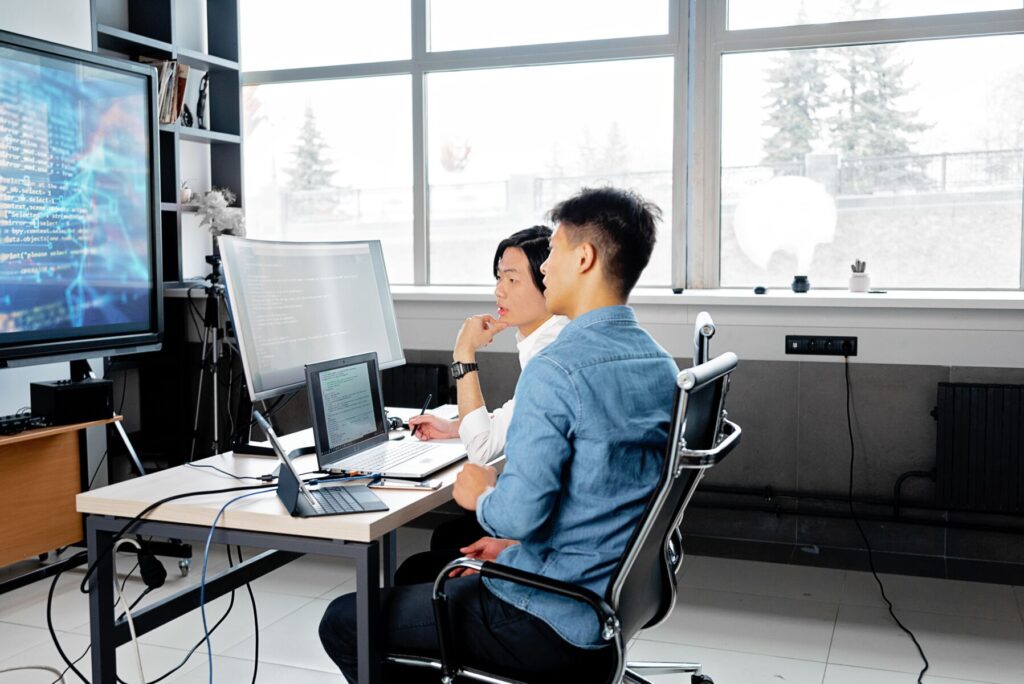
While traditional science laboratories offer a more hands-on approach to real-driving emissions scenarios, virtual labs can help students and private sector employees predict future behavior and hypothetical scenarios. The result is better forecasting for real-time decision-making.
| Work Area | Physical Lab | Virtual Lab |
| Vehicle | Actual vehicle or engine | Provides a digital representation and/or model of the world |
| Drive cycle | A drive cycle is performed on a dynamometer or track | Run in a simulation |
| Measurements | Uses analyzers and sensors to conduct measurements | Measurements and parameters are changed digitally |
| Changes | Hardware and calibrations are changed physically | Parameters are changed via a digital interface |
| Iterations | Iterations tend to be slower and more resource-intensive in a physical laboratory | Virtual labs provide the potential for many rapid iterations |
| Purpose | To measure actual behavior | To explore and predict future behavior in real scenarios |
An example: Exploring vehicle emissions in virtual laboratories in the automotive industry
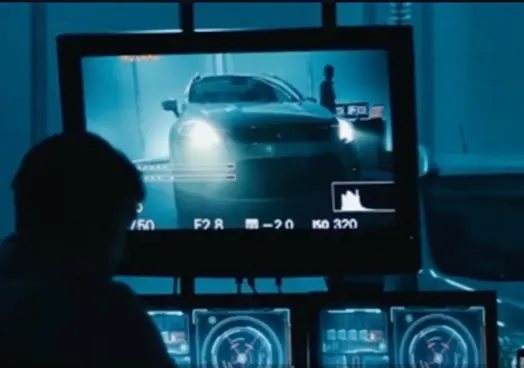
To help clarify why virtual laboratories can provide quality data, let’s take a look at the automotive industry. Assume an engineer wants to determine how an engine-calibration change affects nitrogen oxides (NOx), carbon dioxide (CO₂), fuel use, and catalyst performance during a Federal Test Procedure-75 (FTP-75) drive cycle.
Working in an in-person physical laboratory would require the following two steps:
- Load the calibration into the vehicle.
- Prepare the vehicle and laboratory equipment for emissions monitoring and reporting.
- Run the FTP-75 cycle.
- Measure the requested emissions and vehicle/engine parameters.
- Analyze the results of the test.
- Change the calibration, and repeat the process.
In contrast, virtual labs allow for multiple iterations and configurations before running physical laboratory or in-field tests. The steps required to run an emissions test in the automotive industry include:
- Load the proposed calibration parameters into the digital model.
- Run a digital FTP-75 simulation.
- Review predicted emissions, temperatures, fuel consumption, and other outputs.
- Change parameters and simulate your model once more.
- Select the most promising or highest-risk configurations for physical testing.
With vehicle emission testing, the goal is generally not to eliminate physical testing. The goal is to use simulation to reduce unnecessary physical iterations and focus in-field testing on the use cases that require the most attention.
The main concept that drives virtual lab emissions testing
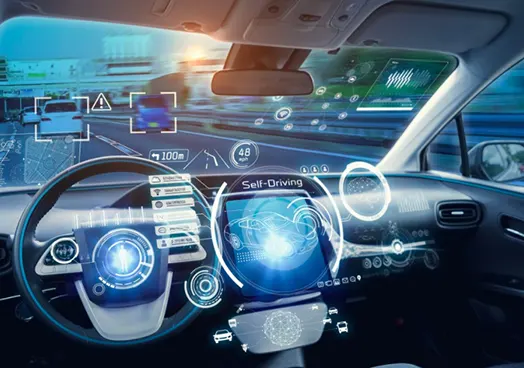
A virtual laboratory depends on models. The main concept that drives this model relies on:
- The model
- Data
- Validation of results
If we go back to the example of our vehicle, the core concept starts and ends with the following touchpoints:
Vehicle → Sensors/portable emissions measurement system (PEMS)/on-board diagnostics (OBD) testing → “Ground-truth” data for AI/ML machine learning models → Virtual lab → Predictions
A virtual lab depends on models. Those models must represent a vehicle closely enough to be useful for making predictions. Real measurements are therefore needed to build, calibrate, train, and validate the virtual environment.
“Ground truth” means data measured from the physical system rather than generated by the simulation. For emissions work, ground-truth data can include:
- Measured nitrogen oxides, carbon dioxide, carbon monoxide, hydrocarbons, oxygen, and particulate information
- Vehicle speed
- Engine parameters
- GPS position
- Ambient conditions
- Exhaust conditions
- Synchronized time-series data
The takeaway from the concept is that the same data that informs physical models informs virtual labs. The difference is that virtual labs can simulate hypothetical scenarios in equal or less time than a physical model.
As such, they’re extremely helpful for powertrain calibration, real driving emissions (RDE) testing, electronic control unit (ECU) validation, and stress-testing vehicles. The real question is whether virtual models produce results that are the same or similar to physical systems.
We can reconcile the difference with what we call data validation.
What does data validation mean?
Data validation is the process of checking whether the virtual model produces results that agree sufficiently with the physical system for the intended engineering use.
An example of referencing the virtual model to the physical system goes as follows: Let’s say we’re running an RDE test with both a virtual and physical model.
- The virtual model predicts NOx = 0.15 g/mile
- The physical test measures NOx = 0.40 g/mile
We can’t take these results to make final decisions — at least not yet! First, we must investigate the reason for the difference before relying on the model to assess said condition.
This compare-and-contrast evaluation method is common. For example, engineers may compare complete time traces, cumulative mass, distance-specific emissions, temperatures, transient events, engine load, speed, fuel consumption, or other variables before arriving at a final number, if any.
More often than not, the above-mentioned information is used to help paint a full picture of the data displayed through a virtual model. As such, real-world data is key to making accurate predictions and conclusions based on the activity, technology, and results provided by the model.
Why real-world data matters
Regardless of whether you’re using a virtual or physical lab, real-world data matters because it can help you improve lab-related processes, such as:
- Training and tuning data-driven, AI, and/or ML models
- Calibrating physics-based models
- Validating simulated emissions and fuel-consumption behavior
- Identifying operating regions where a model doesn’t perform as expected
- Capturing transient events that may be challenging to repeatedly reproduce
- Building larger datasets across vehicles, routes, seasons, loads, and operating conditions
In fact, testing in laboratory environments requires a great deal of control. Physical laboratories help scientists and engineers control for extraneous variables.
But when operating a vehicle on the road in real-world driving environments, you can’t always control for extraneous noise and variables.
For example, a driver and their vehicle are subject to changing traffic, graded roads, inclement weather, varying payload weight, changes in speed & accelerations, frequent starts & stops, and transient engine conditions.
Engineers that collect datasets in real-world conditions can determine whether a model still behaves correctly outside idealized conditions. So, real-world data is crucial to creating a clear image of the way a product or service performs or behaves in the moment.
Labs that use real-world data are crucial to understanding the nature of a product or service, and in turn, the virtual or physical laboratory space can be better calibrated and tweaked when real-world data is used.
Virtual labs and AI/ML

Scientists often use virtual laboratories to sync with AI and machine-learning models. The scientists can then use AI and ML to identify relationships in large datasets that may be difficult to represent with simple equations.
For example, a model can deduce relationships among engine load, temperature,
vehicle speed, catalyst conditions, and measured emissions. Plus, an AI model’s usefulness depends heavily on the quality, coverage, synchronization, and representativeness of the data used to train and validate it.
In other words, poor input data can produce a sophisticated model that still won’t quite calculate the real-world conditions that the model aims to represent.
What virtual labs can and can’t do
At this point, you may be wondering, what are the limits of virtual labs, and what can it accomplish? As such, virtual labs can:
- Screen options for improvement in fields like engineering
- Reduce repetitive physical testing
- Explore unusual models or conditions
- Support calibration development
- Use historical data to make broader conclusions
- Support AI/ML and predictive engineering
Virtual labs won’t automatically be able to help with the following items:
- Replace physical testing that helps validate data
- Guarantee clearance for regulations-related issues
- Correct poor-quality input data
- Eliminate random chance that can affect the quality of the results
- Ensure 100% accurate predictions
Ensuring you have efficient, human-operated systems is one of the best safeguards for eliminating random chance, which is where human-operated portable emissions measurement systems fit in.
Where PEMS and virtual labs meet
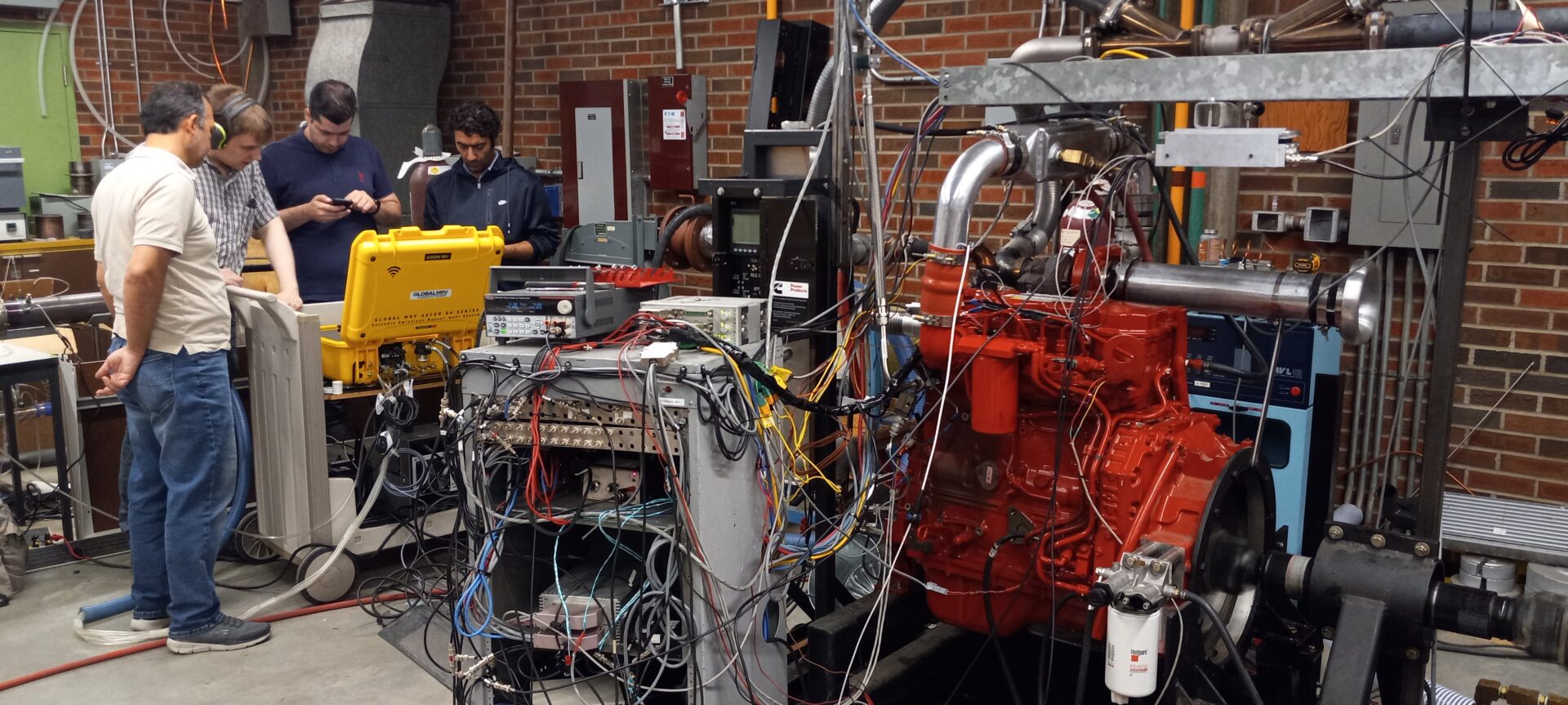
Industry professionals who use portable emissions measurement systems (PEMS) can now move measurement outside the traditional laboratory. PEMS allow engineers to collect synchronized data while a vehicle or machine operates in real world settings.
Plus, in a virtual-lab program, the value of PEMS isn’t limited to regulatory testing and environmental compliance audits. The measurement system can serve as a ground-truth data source used to compare the results from the digital vehicle produced by an AI and ML model with the results produced from a physical laboratory vehicle test.
Looking for quality data powered by physical and virtual laboratories?

Whether you’re an emissions specialist, vehicle research and development team, or engine manufacturer, virtual and physical labs can help you make your operation greener and cleaner. In summary:
✅ A virtual lab predicts outcomes.
✅ A physical test measures outcomes.
✅ Data informs both of the above-mentioned lab tests, helping stakeholders make more informed decisions.
The better the physical data and validation process, the more confidence engineers can place in the virtual laboratory environment. And when product development teams build greater confidence, they can deploy measurement systems to become critical elements of the digital development infrastructure and compliance process.
If you’re looking for reliable portable emissions measurement systems and emissions testing equipment that’s powered by AI/machine learning tools for real-driving emissions (RDE) testing and virtual laboratory environments, we’re happy to help.
Our Axion R/S PEMS and Firefly PEMS are set up in an industry-leading 15-20 minutes, provide smooth delivery signals, and allow users to measure, verify, and report exhaust emissions and other key calibration data for real-driving environments.
Plus, on-site, online, phone, and email support is included when you rent a PEMS or use it for a hardware-as-a-service (HaaS) rental.
To learn more about PEMS emissions equipment and how it can help your operation, we invite you to contact our vehicle emissions specialists at +1 (716) 740-2912. We look forward to helping you achieve your goals.
GlobalMRV: Emissions Testing Systems that Harness the Power of Virtual and Physical Labs