

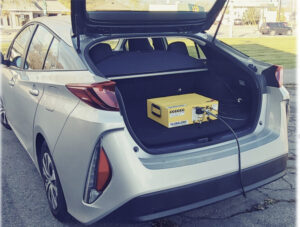
Original equipment manufacturers (OEMs) and business teams: You’ve likely needed a basic or standard drive cycle to help you assess vehicle performance.
In fact, a basic drive cycle gives you information to evaluate the performance of a vehicle’s onboard diagnostics (OBD) system. Whether for compliance reasons, engine development and research, or just plain ol’ making a great product, drive cycles are essential for creating functional, fully operational, and efficient machines.
With them, you can create quality products that make the world a better place. But how do drive cycles work?
GlobalMRV here: As one of the world’s leading vehicle emissions testing, reporting, and measurement teams, for nearly 20 years, we’ve helped OEMs, research and development teams, and engineers create cleaner operating vehicles through emissions verification and certification.
If you’re wondering what drive cycles are and how to use them to your advantage, you’ve come to the right place. In this short article, we’ll walk you through several drive cycle-related topics to help with your operation, including:
- What is a drive cycle?
- What a drive cycle looks like in real time
- Why drive cycles matter
- Common drive cycles that are used in engineering and product development
- Laboratory drive cycles versus real-world driving scenarios
- Driving cycles versus real-driving environments (RDE)
- Why drive cycles matter for OEMs in vehicle manufacturing
- Where to find reliable vehicle emissions testing that rely on quality drive cycle data
What is a drive cycle?

A drive cycle is a defined pattern of vehicle operation used to create repeatable conditions for measuring emissions, fuel economy, energy consumption, or vehicle performance.
In emissions testing, the drive cycle is the test script the vehicle follows. The cycle defines how the vehicle moves through idle processes, acceleration, cruising, deceleration, and stops. Regulatory cycles specify the target vehicle speed at each moment, and development cycles may be customized for a particular engineering objective.
What a drive cycle looks like
A drive cycle is usually displayed as a graph of vehicle speed versus time. A simplified sequence might be:
Start vehicle → idle → accelerate → cruise → decelerate → stop → repeat
During the cycle, an emissions measurement system, such as our Axion portable predictive emissions monitoring and measurement systems, can synchronize:
- Vehicle speed
- GPS position
- Route conditions
- On-board diagnostics (OBD) and engine operating data
- Exhaust flow
- Greenhouse gas emissions, such as CO₂, CO, NO/NOx, HC, and, as needed, particulate matter and particle number (PM/PN) counts
What’s more, this synchronization connects each emissions event directly to what the vehicle and engine were doing at that moment.
Why drive cycles matter

Running an engine at a constant 2,000 RPM can produce an accurate measurement, but it reveals little about the changing conditions encountered in normal operation. A drive cycle introduces controlled transients and operating changes.
- Acceleration increases engine load and exhaust flow.
- Deceleration may trigger fuel cutoff.
- Vehicle idle time can reduce exhaust flow and catalyst temperature.
- Cold starts can produce very different emissions than fully warmed operation.
- High-speed or aggressive operation can expose behavior that mild cycles don’t.
For example, a statement such as “the engine produced 100 ppm NOx” describes the concentration of a particular exhaust sample at a particular time. A complete drive-cycle result can answer the more useful question: “How much NOx did the vehicle emit over this defined pattern of operation?”
What’s more, the results that come from these questions are often reported as mass per distance or mass per work, such as g/mile, g/km, or g/kWh. Calculating said values requires the data to be combined with exhaust flow and the relevant distance or work information.
Drive cycles matter because they provide actionable data that help engineering teams and regulatory authorities make more informed decisions about vehicle and engine development.
Table: Common drive cycles
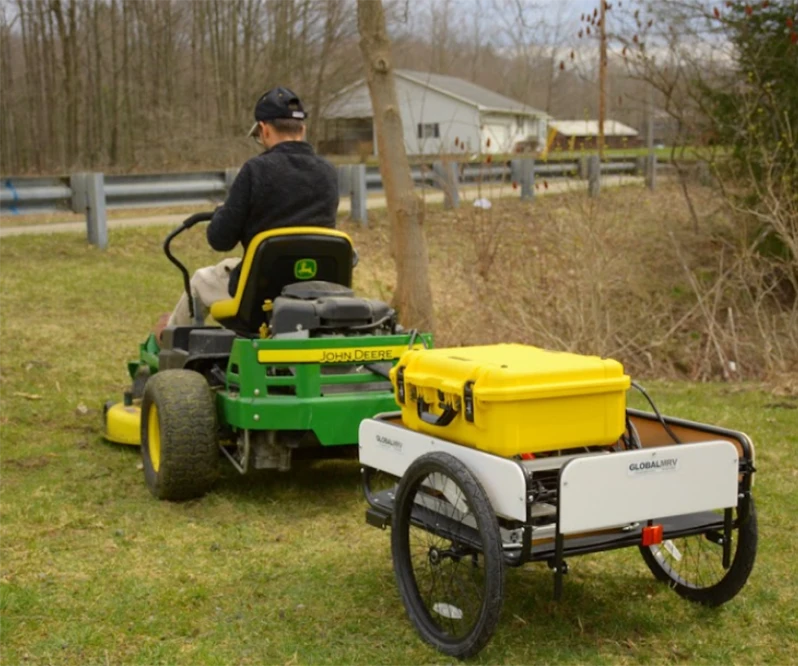
Did you know different drive cycles exist? The same vehicle can behave very differently on different cycles.
For example, FTP-75 drive cycles emphasize stop-and-go operation, while US06 drive cycles introduce more aggressive acceleration and higher speeds. Let’s take a look at common drive cycles for vehicle emissions monitoring, reporting, and testing.
| Drive cycle | Typical use |
| FTP-75 | U.S. light-duty vehicle emissions, including substantial stop-and-go operations, such as traffic stops |
| UDDS | Particularly suited for urban or city driving |
| HWFET | Highway fuel economy testing |
| US06 | Used to assess the impact of aggressive accelerations and higher-speed operations |
| WLTC | Global light-duty testing associated with Worldwide Harmonized Light Vehicles Test Procedures (WLTP) |
| WHTC | Used for heavy-duty engine testing |
| NEDC | Often used for older, European light-duty cycle testing. This testing procedure has largely been replaced by new testing cycles |
| Custom/original equipment manufacturer (OEM) cycles | Used for key processes, such as development, durability, calibration, validation, and troubleshooting |
Laboratory cycles as they relate to real-world driving
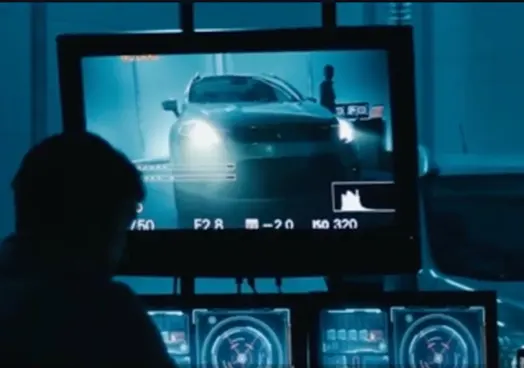
Many regulatory cycles are performed on a chassis dynamometer. For example, the vehicle being tested remains stationary while the dynamometer simulates road resistance and the driver or automation follows the prescribed speed trace.
The major advantage of using drive cycles in laboratory settings is that they can be easily repeated. What’s more, laboratory cycles provide the framework for conducting multiple emissions verification tests, calibrations, and hardware configurations on a variety of vehicles, all within closely controlled testing conditions.
Drive cycles and portable emissions measurement systems (PEMS)
In contrast, though similar in nature, a portable emissions measurement system (PEMS) moves the vehicle emissions monitoring, reporting, and measurement process outside the laboratory.
With PEMS, a vehicle is exposed to actual traffic, hills, road conditions, altitude changes, and local weather. A driver’s behavior, payload, and exhaust output can be measured via PEMS.
In other words, if you’re looking to conduct vehicle emissions testing outside of the laboratory and in real-world conditions, PEMS can help. It’s the technology used to measure the real-world emissions produced in the field during real-world driving scenarios.
How is PEMS different from traditional laboratory testing on a chassis dynamometer? PEMS allow engineers and regulators to take drive cycles out of the lab and onto roads to test vehicles in real-time and in real-world conditions to determine their environmental impact.
In other words, PEMS are more flexible in nature, deploy more easily, and can be used in a variety of conditions to measure the immediate impact a vehicle (or engine) has on the environment.
Drive cycles versus real-driving environments (RDE)
A traditional regulatory drive cycle requires the vehicle to follow a predetermined speed-versus-time trace. Real-Driving Emissions (RDE) testing uses a real-world route that must satisfy defined trip and operating requirements, but it doesn’t prescribe every second of vehicle speed in advance.
This non-prescriptive operation method is a central reason PEMS exists; PEMS measures emissions while the vehicle operates under the conditions it encounters in real time.
Why performing a drive cycle matter for OEMS in vehicle emissions testing
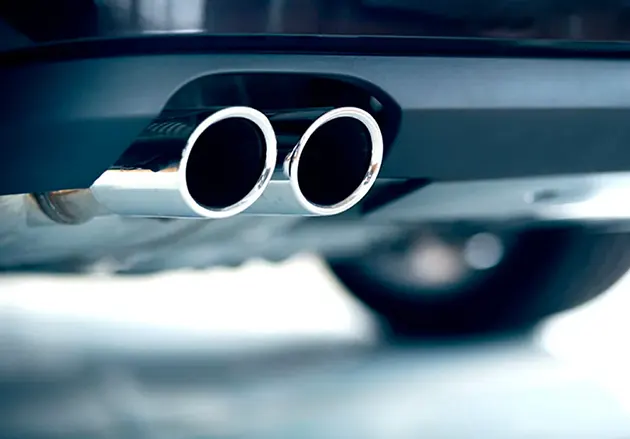
If a drive cycle creates the operating conditions, PEMS records how the vehicle and its emissions respond.
Because the Axion R/S PEMS can collect synchronized emissions, vehicle, GPS, and weather (among other data points), engineers can determine where inside a drive or test event a change occurred. Here’s a sample look at what a drive or test event looks like as it occurs:
- Timestamp 10:32:15– Vehicle accelerates
- Timestamp 10:32:16– Engine load increases
- Timestamp 10:32:17– Exhaust flow increases
- Timestamp 10:32:18– NOx spike occurs
- Timestamp 10:32:20– Catalyst temperature changes
- Timestamp 10:32:22– Emissions stabilize
The above-featured, event-level view is more useful to development engineers than a single test average. High-frequency acquisition improves the ability to deduce relationships from data about short transient emissions events, as they relate to vehicle and engine behavior.
When you’re able to deduce correlations about data and vehicle behavior, you can make better decisions for your team and product.
Need reliable vehicle emissions data that operates with your drive cycle procedure?
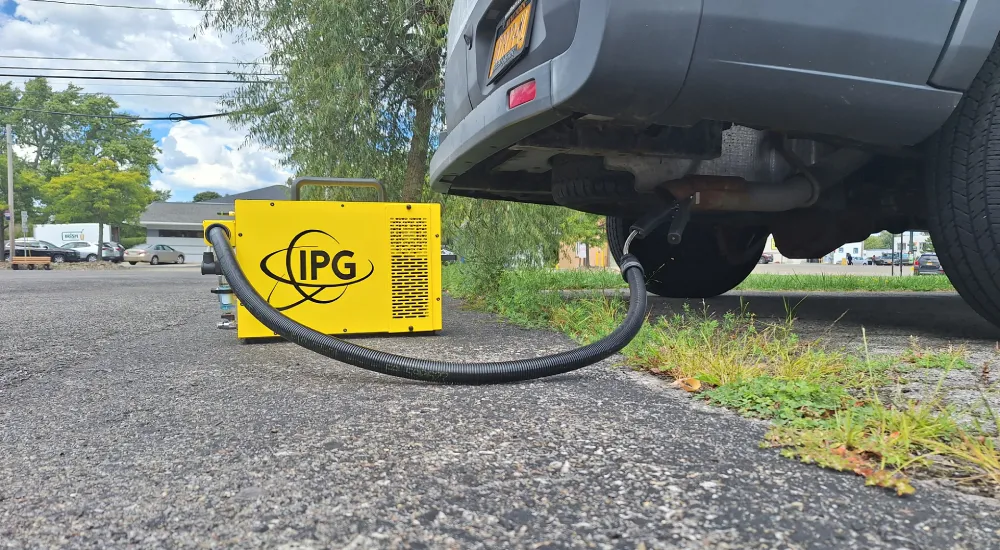
Whether you’re looking to capture the engine load on your vehicle or looking to meet emissions standards like Euro 7 (EU7), basic/standard drive cycles can help you stay in compliance with regulatory environmental compliance audits.
If you’re looking for reliable vehicle emissions data that operates with your team’s systems, our team of researchers, engineers, and PhD academics can help. In the last eight years alone, we’ve collected more than 9,000 hours of reliable data for vehicle emissions testing and helped save original equipment manufacturers (OEMs) and companies more than $12,000,000 on traditional dynamometer and real driving emissions (RDE) testing using a variety of drive cycle-based testing regimes.
Let’s build a greener, cleaner tomorrow together, one vehicle emissions test at a time.
To inquire about our portable emissions measurement systems, hardware, and technologies that support a variety of industrial processes, we invite you to get in contact with our development team.
GlobalMRV: Speedy, User-Friendly, & Integrated Emissions Testing Technology for Your Operation