

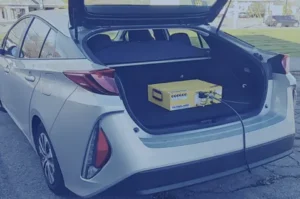
Industrial manufacturers and original equipment manufacturers (OEMs) face immense pressure to reduce their environmental footprint. Whether trimming the amount of coal and gas-powered infrastructure, or adhering more strictly to EPA-related environmental standards, the pressure of adhering to regulatory environmental compliance audits is increasing. But solutions also exist, such as a portable predictive emission monitoring system.
Portable predictive emissions monitoring systems are infrastructure and systems that help monitor and predict common greenhouse gas emissions such as nitrogen oxides, sulfur oxides, carbon monoxide, carbon dioxide, and hydrocarbons. PEMS helps gather data from existing manufacturer instrumentation, using sensors as input to the emissions calculation models, to predict the real-time exhaust output of equipment and vehicles.
If you’re an original equipment manufacturer or operations specialist who’s facing greater regulatory scrutiny over your operation, then this article is made for you.
In this article, we’ll discuss what a portable predictive emission monitoring system is, as well as the following:
- The benefits of PEMS for original equipment manufacturers and businesses
- Common challenges of PEMS
- PEMS versus continuous emissions monitoring systems (CEMS)
- How to install PEMS
- Where you can find PEMS for purchase, hire, and rent
What are portable predictive emissions monitoring systems?
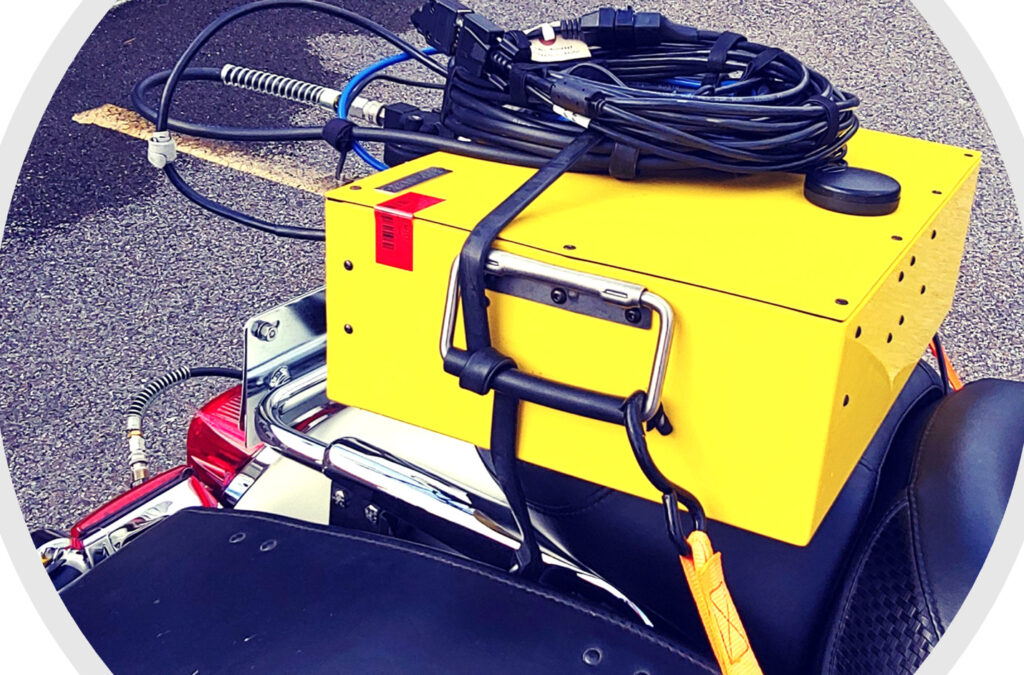
Portable predictive emissions monitoring systems are software-based technologies that provide reliable real-time estimations of emissions through advanced math-based modelling and, increasingly, artificial intelligence and machine learning.
While CEMs are still in use for most smoke stack testing of gas and particulate matter emissions, PEMS can supplement or replace an expensive continuous emissions monitoring system (CEMS) to obtain quality data with less cost associated with each operation. In fact, the added portability and versatility of PEMS products and PEMS accessories mean emissions monitoring, verification, and reporting devices can now measure the exhaust output of more than just smokestacks.
With portable emissions measurement systems, you can install a PEMS device in an industry-leading 15-20 minutes to verify and report mass-flow exhaust emissions, like CO, CO₂, NO, HC, O₂, and more in record time.
Benefits of PEMS software for environmental regulations
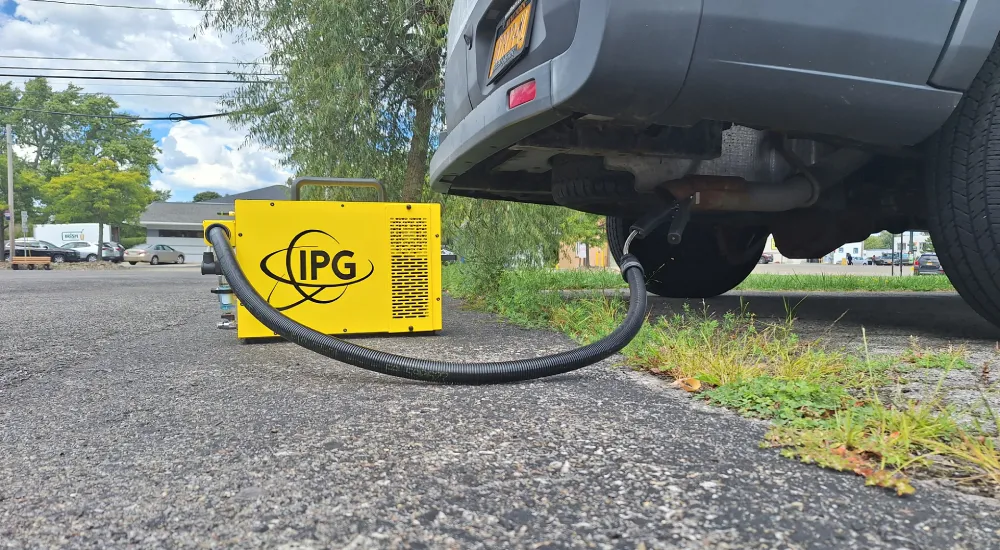
Some of the most prominent benefits of portable predictive emissions measurement systems lie in the instantaneous results they provide for industry professionals. Compared to manual emissions monitoring methods, PEMS tend to provide:
- More accurate real-world emissions, compared to manual techniques for collecting emissions sources (such as isokinetic source sampling or integrated gas sampling)
- Increased efficiency in collecting gas-based emissions samples
- Improved installation times (PEMS can be installed virtually anywhere and in just 15-20 minutes. No laboratory needed; You can take PEMS on the go)
- Reduced expenses due to the portability of the equipment (no spare parts are needed, no shutdown required, and no additional field devices are needed)
Perhaps the greatest benefit of all with PEMS is that most PEMS systems calibrate to help you comply with U.S. and European emissions standards. No more nail-biting over whether you and your team will be able to comply with Euro 7 emissions standards, because each PEMS device can be programmed to deliver the emissions verification that you need for your operation.
The difference between CEMS and PEMS
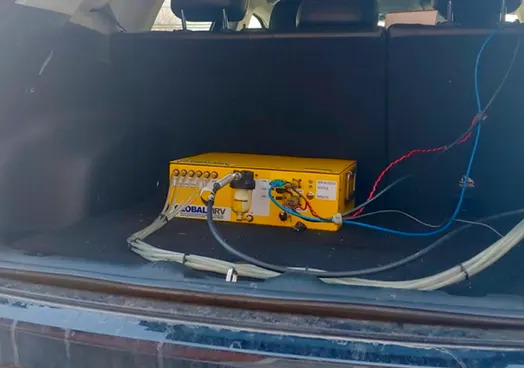
The most salient difference between CEMS and PEMS lies in the infrastructure that allows operators to collect emissions. For example, CEMS analyzers sample and identify the chemical compositions of flue gas.
In contrast, portable predictive emissions monitoring systems use software that uses existing process data and statistical models to predict the composition of a substance. What’s more, PEMS collects data from an operation’s existing systems and can pair with artificial intelligence-based algorithms and equations to predict the emission output of a particular substance.
In the U.S., Europe, the United Kingdom, and countries in the Middle East, PEMS is the primary source for monitoring emissions. In other countries, CEMS tends to be the primary means for monitoring and reporting emissions.
What’s more, PEMS doesn’t require any spare parts and installs much more quickly than CEMS, making it a prudent option for industrial and manufacturing teams looking for quick, actionable data to predict emissions levels.
Summary: Portable predictive emissions monitoring systems vs. continuous emissions monitoring systems
| Portable predictive emissions measurement systems (PEMS) | Continuous emissions monitoring systems (CEMS) |
| 1. Approved for use in most countries 2. Lower maintenance and operating costs 3. Doesn’t require new hardware, spare parts, or heavy manpower 4. Portable emissions monitoring systems like the Axion R/S or Firefly can be installed in just 15-20 minutes | 1. Approved for use in most countries 2. Requires a higher upfront operating and maintenance costs 3. More hardware-based, requires spare parts, and relies on heavy manpower 4. Can be installed in a matter of weeks |
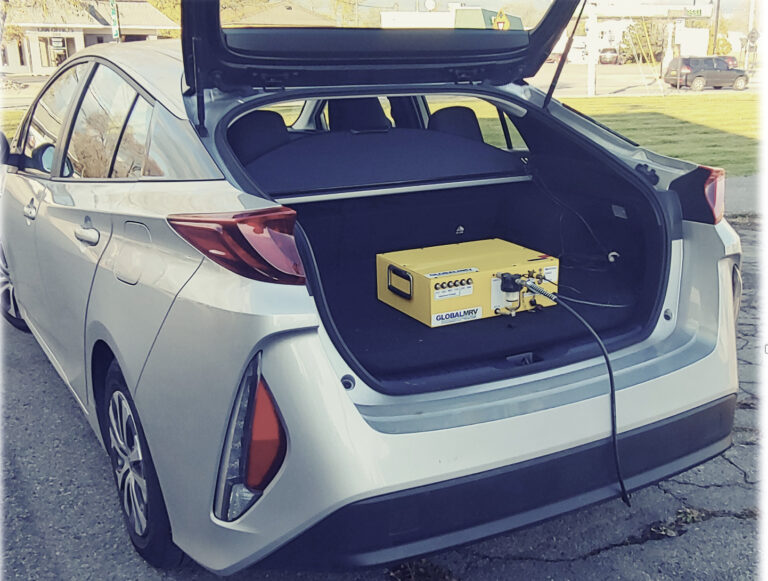
Not all PEMS install the same. Here’s how to install GlobalMRV PEMS.
If you’re looking for quick, accurate, and actionable emission data, or if you’re looking to streamline your entire emissions monitoring & sustainability workflow, PEMS provides a speedy, reliable, and flexible solution for all your research and product development needs.
But be careful, as not all PEMS install the same way. Make sure to follow the assembly instructions provided with your PEMS.
As an example, here’s how to install GlobalMRV’s PEMS. Start with the following general process:
- Mount the main PEMS unit, which houses gas analyzers for pollutants like NOx, CO, SO₂, and more, inside or outside of a vehicle.
- Secure your equipment using heavy-duty mounting brackets or straps.
- Integrate engine sensors by installing exhaust mass flow meters directly onto a vehicle’s tailpipe to measure the flow and volume of exhaust emissions.
- Connect sampling lines from the PEMS unit to the mass flow meter.
- Set up data loggers to your vehicle’s engine control unit via an on-board diagnostics (OBD) port.
- Add additional components for added reliability, like GPS modules on the roof of a vehicle, to track data (such as ambient temperature, humidity, and pressure).
- Power up your emissions monitoring system and begin obtaining baseline measurements to improve the overall efficiency and veracity of your operation.
Since PEMS uses advanced data analysis and statistical methods to predict discharges from various industrial-manufactured equipment, the emission data collection process can involve multiple detailed steps. If you need help setting up your emissions monitoring process or any of the tools for acquiring emission data, don’t hesitate to reach out to our team.
We’d be happy to walk you through, step by step, how to install and make the most of your portable predictive emissions measurement system.
Spotlight on PEMS
Curious to see what a portable emissions measurement system looks like in real time?
Our real-driving emissions testing systems ensure that vehicles meet emission standards on the road to better meet regulatory demands.
Check out what real driving emissions testing looks like on our Instagram page.🚗🚚🏍️
Where to find PEMS for purchase and rent
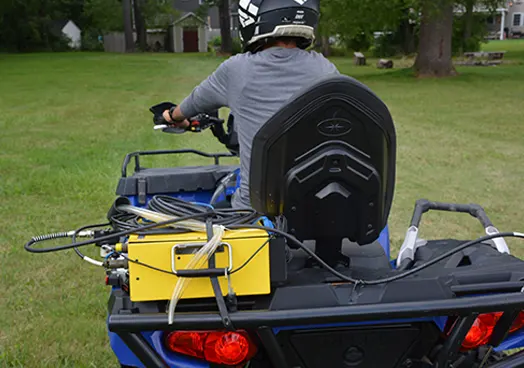
Industrial operations specialists and original equipment manufacturers (OEMs): If you’re looking to measure, verify, or report emissions more accurately and continuously, predictive emissions measurement systems and portable predictive emissions measurement systems can help.
These dynamic, minimal-hardware, and quick-installing devices are replacing traditional manual monitoring methods, helping OEMS reduce costs associated with emissions monitoring and emission estimations. Given the immense pressure to reduce emissions using new, innovative predictive models, and given the release of new EPA emission standards, opting for clearer, cleaner emissions capturing models can help businesses comply with regulations and make the world a greener, cleaner place to live.
If you’re looking for where to find portable predictive emissions measurement systems, you can find them at manufacturers who build precision instruments for measurement and analysis. For example, we carry more than 12 different PEMS products that help capture real-driving emissions (RDE) on and off the road.
Having collected more than 9,000 hours of reliable data for vehicle emissions testing and saving OEMs more than $12 million on traditional dynamometer and RDE testing with our PEMS products since 2018 alone, we’re in the business of building greener, cleaner portable emissions measurement systems that help save you time, money, and resources.
To inquire about renting or purchasing one of our PEMS products or PEMS accessories, don’t hesitate to contact us. We look forward to helping you meet your goals and make our world a little brighter each day.
GlobalMRV: PEMS, iPEMS, & Mini-PEMS and Testing Solutions Built With Your Operation in Mind