

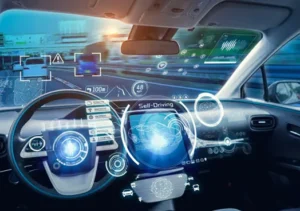
IoT, or the internet of things, in vehicles is quickly changing the way we do transportation. IoT in vehicles seems to be everywhere, from car manufacturing to self-driving vehicles to road traffic management and parking.
The 21st century is quickly ushering in a new era of technology. Connected cars are becoming more popular by the day. And the way we interact with, design, build, and operate vehicles has changed a great deal with the rise of the Internet of Things.
But does IoT in vehicles mean better vehicles? And, where does IoT in vehicles and AI & machine learning dovetail with combustion-engine powered vehicles?
For more than 20 years, our GlobalMRV team has been monitoring and building vehicle emissions software and products to help adapt to the changing world we live in and the IoT of this moment.
If you’re curious to learn more about the IoT in vehicles and what that means for you as a business and everyday citizen, you’ve come to the right place.
In this article, we’ll cover a range of topics related to the Internet of Things, including:
- What is IoT in vehicles?
- What is IoT in the automotive industry at large?
- The benefits of IoT in vehicles
- The disadvantages of IoT in vehicles
- The challenges of IoT in vehicles
- The current moment and future of connected cars and the automotive market
- An application of IoT for creating greener, cleaner cars
- The importance of adhering to research-driven sustainability consulting for smart automotive IoT technologies
What is IoT technology in vehicles (use cases)?
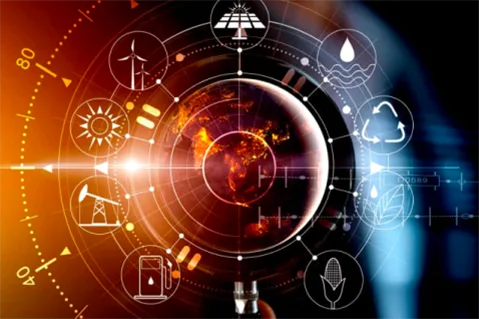
IoT technology in vehicles and, by extension, in the automotive market, refers to the integration of internet-connected devices, sensors, and modules into vehicles to help collect and exchange information and data. These sensors and devices embed in a vehicle so that they communicate with each other, within the vehicle, and to external locations.
The connection points between these devices help enable different services that enhance the safety, efficiency, performance, and functionality of driving. A few different examples of IoT technology in real-driving environments include:
- Real-time traffic monitoring
- Smart traffic lights
- Dynamic emergency response systems
- Smart parking
- Predictive traffic analytics
- Public transportation innovations
- Toll and ticket automation and monitoring
Many benefits and challenges exist with digitizing and automating many human-run processes with IoT. The automotive industry is making these benefits and challenges more visible.
Let’s take a look at how the IoT is shaping up in the automotive industry at large.
Key components of automotive IoT
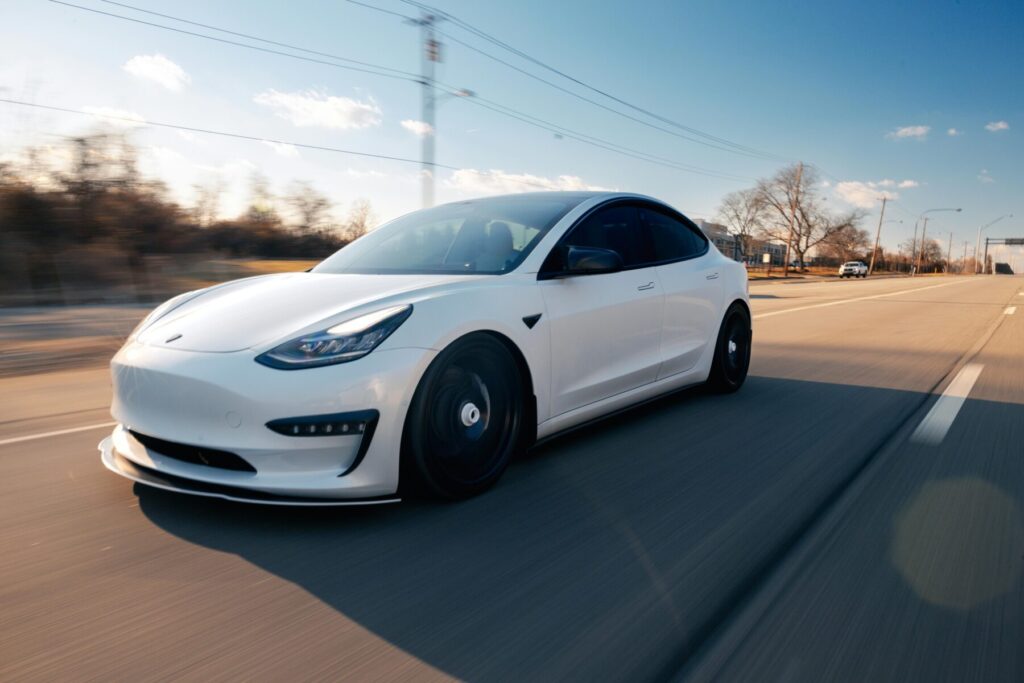
In automotive IoT, you’ll find infrastructure such as the following:
- Sensors: For engine health, tire pressure, cameras, LiDAR/radar (for ADAS), location (GPS), driver biometrics, and more
- Connectivity: Telematics control units (TCU), embedded modems, over-the-air (OTA) updates, and more
- Data handling: Edge computing in the car, plus cloud/edge analytics, often with artificial intelligence and machine learning.
Examples of these components include Tesla’s connected ecosystem, General Motors’ OnStar technology, BMW’s ConnectedDrive framework, and fleet systems from manufacturers.
If you’re looking for said infrastructure for research and development, portable emissions measurement systems (PEMS) can provide data that overlays into your systems. For example, Firefly3 PEMS is IoT data-ready and can support your team with all your data-related processes.
The purpose of automobile IoT
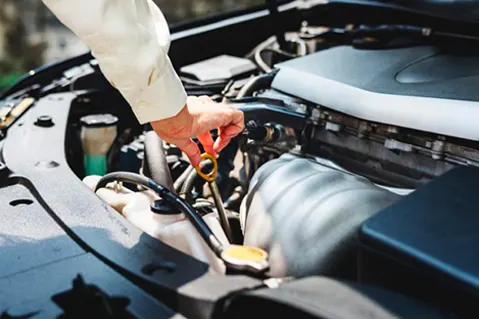
The primary goals of automobile IoT are to accomplish the following:
- Enhance the safety, efficiency, and convenience of automobiles
- Enable predictive maintenance and reduce downtime
- Support a seamless transition to autonomous driving
- Improve traffic flow, fuel/energy efficiency, and user experience
- Create new business models (for example, usage-based insurance, remote diagnostics, and fleet optimization
At the end of the day, the purpose of automobile IoT is to bridge vehicles with the external world for real-time decision-making and automation.
What is IoT in the automotive industry? Automotive IoT solutions explained

IoT in the automotive industry is a niche application of IoT at large. It refers to the integration of internet-connected devices like driving speed gauges, media streaming in vehicles, and portable emissions measurement systems (PEMS) for vehicles.
In other words, these sensors and devices are embedded throughout a vehicle and help communicate with each other, the vehicle, and external networks.
You can think of IoT in the automotive market as a range of devices and processes that enable connectivity across a variety of applications and services. These applications and services then enhance the safety and reliability of driving on the roads.
Examples of IoT applications in the automotive industry include:
- Telematics and vehicle diagnostics
- Vehicle-to-vehicle (V2V) and vehicle-to-infrastructure (V2I) communication
- Autonomous, self-driving vehicles
- Fleet tracking for a range of applications, like monitoring driver behavior, optimizing fuel usage, and optimizing driving routes
Both drivers, fleet operators, and engineers benefit from IoT because it helps streamline complex, manual processes that can now be automated and delegated elsewhere. The result is more time, energy, and resources available for more complex problem-solving across a variety of spaces in the automotive industry.
The benefits of automotive IoT
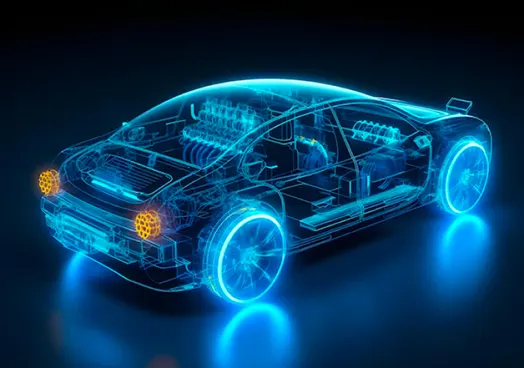
Connected cars, systems, and devices are helping make life easier for drivers and automotive manufacturers. Some of the many benefits of automotive IoT include the following:
- Seamless remote software updates: For vehicles that rely on software upgrades (such as Teslas) to operate at peak efficiency, IoT connectivity helps manufacturers update vehicle software “over the air” (OTA). OTA can help update software for battery performance, suspension lifts, and much more. IoT-connected software allows manufacturers to patch issues that normally take days to fix, all in a matter of hours or minutes.
- Predictive maintenance: Determining which part of a vehicle needs troubleshooting before it falls into disrepair is another benefit of IoT-driven technology. Predictive maintenance supports the collection of data and adjustment of car settings to prevent wear and tear, but also to update car mechanics about future repairs that need to be conducted to remain operational Predictive maintenance monitors components and predicts failures before they occur, reducing breakdowns and repair costs.
- Safer, simpler parking: Drivers in the U.K. lost nearly 115 hours a year due to congestion, costing more than a billion dollars alone in 2019, according to research from Inrix.com. IoT can simplify parking by helping drivers map out open parking spots. What’s more, IoT can help transportation specialists measure parking availability and the duration of parking to make more informed decisions for urban planning.
- In-vehicle entertainment: In the center console of most vehicles is a screen where drivers can make phone calls, send text messages, view weather, browse websites, play music, and more. IoT for multimedia enables drivers and passengers more ways to delight and enjoy driving while on the road.
- More predictable traffic: In select IoT-enabled vehicles, IoT enables drivers to access real-time traffic data to predict and report traffic patterns on the road. Connected cars can work with other cars to predict and report traffic patterns. Predicting traffic can help drivers travel more fuel efficiently and safely on the road.
Ancillary advantages of automotive IoT
Ancillary advantages of automobile IoT include the following:
- Safety enhancements: Real-time alerts for collisions, blind spots, emergency braking, and V2V/V2I communication to prevent accidents.
- Fleet enhancements: Better fuel/energy consumption (especially for electric vehicles), reduced idle time, and lower operational costs for fleets, real-time tracking, driver behavior monitoring, and asset optimization for commercial vehicles
- A more convenient user experience: Remote start/lock, personalized infotainment, OTA software updates, real-time navigation with traffic data, voice assistants, and integration with smart homes
- Environmental benefits: Reduced emissions through efficient driving and traffic management.
- Potential new commercial services: Usage-based insurance, remote diagnostics, and data monetization for manufacturers.
The disadvantages of automotive IoT
With any innovation, disadvantages exist. The disadvantages of automotive IoT include:
- It’s expensive: Expensive hardware, connectivity subscriptions, integration, and ongoing data & cloud expenses can add up over time.
- It’s complex: Automotive IoT adds layers of software and dependencies that can introduce reliability issues to a business’s processes and offerings.
- It can drain battery and hinder performance: Constant connectivity and sensors can impact vehicle efficiency (especially with electric vehicles).
- It doesn’t yet have a standardized operating system: Different manufacturers use varying standards, making seamless business ecosystem integration challenging.
- It may produce more data than can be processed: Massive data generation requires robust processing and storage.\
The challenges of the automation of real-time data with automotive IoT

Nevertheless, as you can imagine, managing a network of connected devices through the Internet of Things technology can be somewhat challenging. Some of the challenges of IoT capabilities include:
- Keeping data secure and private: Automotive IoT comes with a bit of a caveat. It requires eating tons of data and giving up personal information. As a result, companies that breach data privacy protocols could face hefty fines, and consumers must be more vigilant about and educate themselves on how IoT will affect their personal privacy. With automotive IoT, vehicles can be hacked remotely via infotainment systems, telematics, or weak application programming interfaces (APIs), potentially giving hackers control of brakes, steering, or other key data. Historical examples include Jeep and Tesla hacks. What’s more, constant collection of location, driving habits, biometric information, and personal data raises surveillance and data-sharing issues.
- Connectivity: Certain areas, manufacturers, and municipal zones may have less connectivity than others, making driving more challenging in areas that don’t have infrastructure that supports the Internet of Things technologies.
- Standardization of regulations: Varying global rules on data privacy and safety can affect the widespread adoption of automotive IoT.
- Technology delays or rejection: Not everyone is on board with the adoption of the Internet of Things, which can make creating a centralized system that benefits all individuals a real challenge. As such, automotive manufacturers have often developed their own standardized system of IoT for their particular company. Furthermore, creating efficient systems for, for example, vehicle emissions monitoring and reporting is therefore more challenging when a uniform standard for IoT hasn’t yet been established across the automotive industry. Plus, the cost to retrofit older vehicles or integrate them into supply chains is complex and often very expensive.
- Questions of ethics can arise: For example, who is responsible in case of an autonomous, self-driving vehicle failing or being hacked?
The real-world impact of automotive IoT today

Automotive IoT is already affecting our world today. In addition, the 21st century is witnessing rapid change and transformation in the automotive sector due to IoT. A few examples include:
- Consumer vehicle updates: Features like adaptive cruise control, lane-keeping, automatic parking, real-time traffic avoidance, and remote vehicle status via apps are taking the world by storm.
- Fleets and logistics are being better organized: Predictive maintenance is currently cutting downtime, route optimization, and fuel monitoring save costs on maintenance, and real-time tracking improves the delivery of goods.
- Traffic safety is improving: Vehicle-to-everything (V2X) communication reduces congestion and accidents. Cities that integrate smart technology can help optimize the flow of traffic with V2X-connected vehicles.
- Electric vehicles and autonomous driving vehicles are on the rise: Battery health monitoring, optimal charging station routing, and foundational technology for self-driving cars continue to proliferate.
- Insurance policies reward safe driving: New vehicle usage-based policies are being enacted to help reward safe driving.
The global automotive IoT market is growing rapidly. Driven by 5G technology, AI, and the demand for more efficient mobility, automotive IoT is particularly useful in reducing maintenance surprises, enhancing road safety, and enabling data-driven services to make lives more convenient and pleasurable.
The future of connected cars and the automotive market
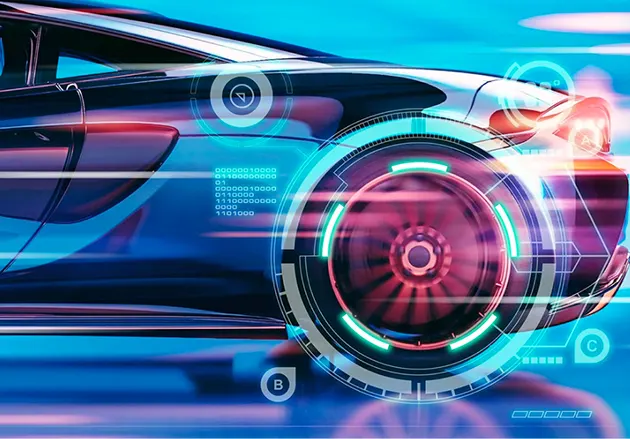
With the advances that connected cars and automotive IoT devices have made, the future for IoT capacities looks bright. Current IoT trends and developments to keep your eyes on include:
- Over-the-air (OTA) updates: Over-the-air updates allow companies to update software from remote locations, as if conducted “over the air,” instead of showing up to a facility in person. As a result of the increase in OTA updates, vehicles will soon receive new features and patches in record time.
- Risk of cyberattacks: The risk of cyberattacks could increase as the sharing of data becomes more widespread. Manufacturers are currently looking into measures and regulations to better protect consumers’ data.
- Transportation updates: Connected vehicles play an important role in urban areas. For example, large metropolises like San Francisco, New York, and Los Angeles are already seeing the adoption of these technologies in autonomous vehicles like robotaxis such as Waymo or Zoox. Consequently, pedestrians can now leverage IoT to coordinate rides and manage drives with greater efficiency.
- Integration with municipal equipment: In addition, traffic lights, road signs, and toll booths can be updated with IoT to optimize traffic flow and road safety.
- Greater standardization across devices: As 5G internet continues to become more ubiquitous, the presence of IoT-enabled devices like self-driving cars, connected vehicles, infotainment systems, and advanced driver assistance systems will become more commonplace.
- Smarter environmental testing technology: As infrastructure adopts IoT in greater capacities, the ability to monitor, verify, and report on their impact continues to grow. In particular, the ability to measure the environmental impact of self-driving vehicles on the road gives automotive experts and researchers greater capacity to measure greenhouse gases and the climate footprint of on-road vehicles.
PEMS: A promising method for reducing automotive emissions with IoT
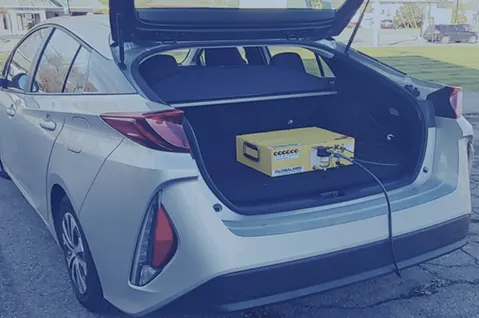
Of all the data-enabled use cases that work with automotive IoT solutions, automotive companies are using portable emissions measurement systems (PEMS) to get the job done.
PEMS are small devices that help product development teams measure more than 100 different touch points on vehicles for 60 different diagnostic testing regimes. PEMS support creating more powerful vehicles that perform better and cleaner. In addition, PEMS can be set up in 10-15 minutes and can be deployed virtually anywhere, giving you key insights on everything from vehicle emissions to particle size counts emitted.
The reason we like PEMS-enabled data with the Internet of Things in the automotive industry is that we now have tools which can be used to create safer, cleaner vehicles on the road that connect to the systems and people who need eyes on them most. Building vehicles that can be updated according to the latest regulations, for example, California Air Resources Board (CARB) and EU 7 emissions standards, may now be easier than ever.
For example, with IoT, data-enabled PEMS, an engineer can pair IoT with AI and machine learning in various automotive facilities. The engineer can use said data to help come up with cars that pollute less, perform better, and last longer. No more lugging clunky equipment or waiting long amounts of time for actionable data.
We’re hopeful that when implemented methodically and thoughtfully, data-enabled PEMS, AI, machine learning, and IoT have the potential to improve our world.
Did you know?
Did you know that GlobalMRV is pioneering the use of IoT technologies in real-driving environments?
👉🏼For a first-hand look at how we use IoT while conducting roadside tests, mountainside, in upstate New York, check out this video of our fleet of Jeeps trucking up the Allegheny Mountains. 🏔️
Automotive experts and fleet teams: Need IoT-driven sustainability consulting?
The Internet of Things is changing the way the automotive market does safety, efficiency, and most importantly, emissions testing. Manufacturers and regulatory bodies must address many of the challenges of IoT for it to become ubiquitous and widely used.
But, that’s where we come in.
Fleet management teams and automotive engineers: As IoT starts to become more widespread, we’re pivoting to meet this demand.
If you’re building an internal combustion, electric, or hybrid engine vehicle, you’re going to need to conduct vehicle emissions tests. Vehicle emissions test are essential for receiving regulatory approval for the production of your vehicle.
Nevertheless, our team uses human, artificial intelligence (AI)-driven, and machine learning-based solutions to help you make testing the emissions of your vehicle a breeze. We’ve collected and analyzed over 9,000 hours of reliable data for vehicle emissions testing. Also, we’ve saved manufacturers and companies more than $12,000,000 on traditional dynamometer and real-driving emissions (RDE) testing for clients across all different industries and niches.
If you need data-enabled vehicle emissions testing that uses IoT, AI, and machine learning, we’d be happy to help. For an initial consultation or risk-free trial of our IoT, data-enabled PEMS systems, contact us today.
The future is bright. We look forward to helping you build it right.
GlobalMRV: Reliable Vehicle Emissions Testing Solutions Built With IoT in Mind