


Whether you’re an original equipment manufacturer (OEM) or a savvy business owner, artificial intelligence (AI) and machine learning (ML) are changing the way we do business in buildings and on the road.
Especially for OEMs in the vehicle emissions testing sphere, creating AI and ML models that can quantify, report, and verify vehicle emissions is key to ensuring a speedy, replicable process that makes vehicle operation safer and more secure.
GlobalMRV here: For nearly two decades, we’ve been working at the forefront of where AI and ML learning meet better vehicle research and development. If you’re looking for a way to optimize your operation with AI and machine learning, or to learn about what’s involved with model training, we’ve got you covered.
In this article, we’ll walk you through the following model training-related topics, such as:
- What is model training?
- How does it work?
- The difference between models versus algorithms
- 3 Common types of model training
- 7 steps for training a machine learning model
- Where to find reliable AI and ML model training that supports reliable vehicle emissions monitoring and reporting
- Frequently asked questions about AI and ML model training
What is model training, and how does it work?
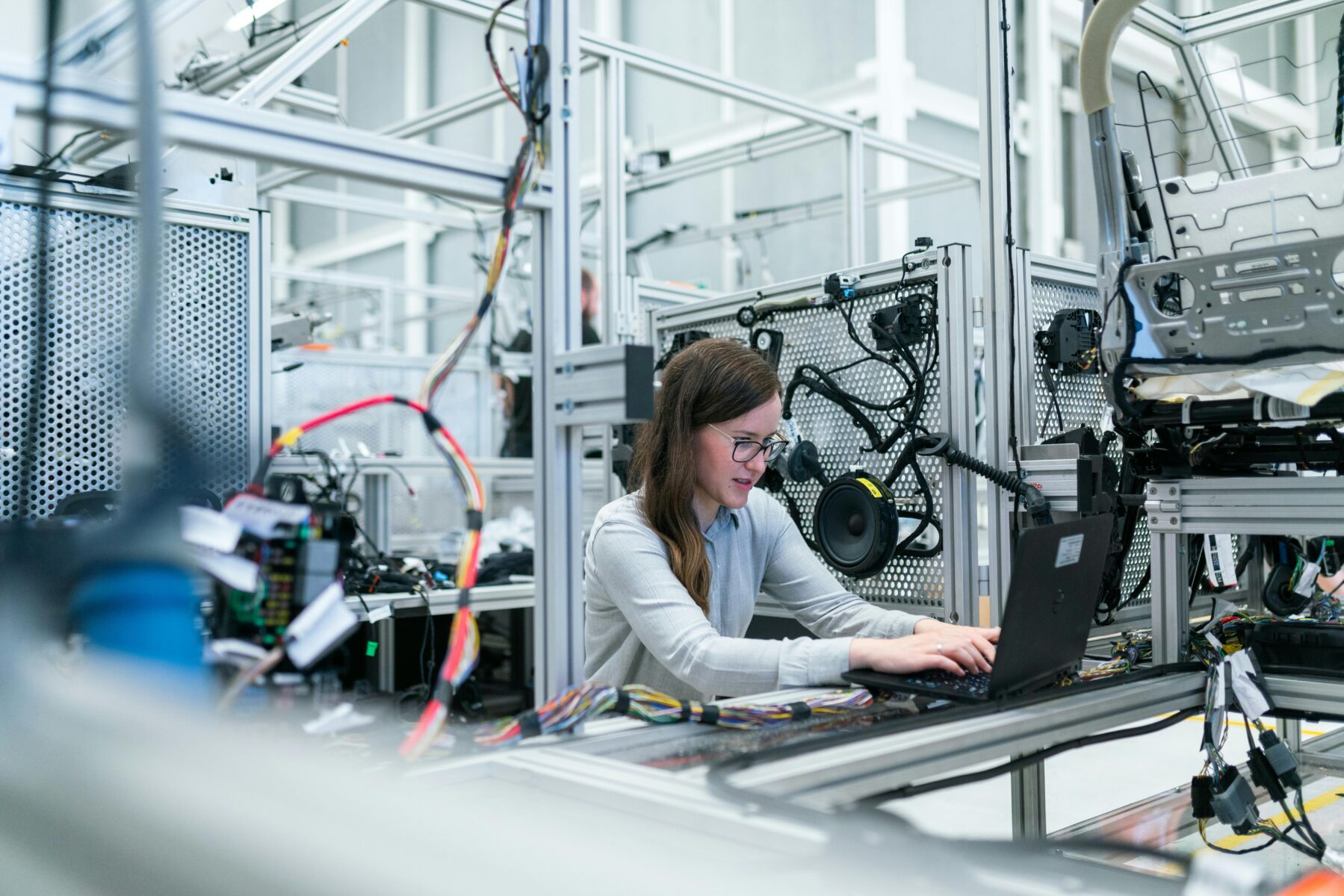
Model training is the process of teaching a machine learning model how to optimize performance on a training dataset. The training dataset can involve a series of sample tasks relevant to the model’s eventual use cases.
If the training data helps resemble real-world scenarios, ways of thinking, or ways of operating, then the model will be asked to learn the patterns and correlations that will help it to make accurate predictions and answers about new prompted problems.
In practice, training models involves collecting and carefully using data to measure potential rewards or losses that could result from its stipulations, and then changing any parameters or conditions needed to ensure it provides accurate and reliable results.
The difference between models versus algorithms

Alas, sometimes models are referred to as algorithms. The truth is that they are anything but.
Models and algorithms are different from one another in their relationship to training. For example, algorithms are procedures described in mathematical language or code to help make decisions based on the information provided to them.
Models, on the other hand, are the outcomes of the process of optimizing an algorithm’s parameters for performance. Models also help us apply the same principles to new data.
Algorithms are often fitted to datasets to help create outcomes, outcomes which are the result of model-driven analyses. Worth noting is one particular model called deep learning.
Deep learning is a subset of machine learning whose models are based on neural networks. These models are important because they help lay the foundation of a great deal of manufacturing and industrial work conducted in the private and public sectors by OEMs and businesses.
Let’s take a look at a few common types of model training used by said OEMs and businesses.
Common types of model training

In most cases, AI models are categorized as belonging to one of three distinct machine learning categories:
- Unsupervised learning
- Supervised learning
- Reinforcement learning
Let’s take a look at some of the use cases, parameters, algorithms, and processes involved with each.
Unsupervised learning
Unsupervised learning algorithms aim to discover patterns in unlabeled data. In contrast, similarities, correlations, and potential clusters of information are most often used with unsupervised learning.
In contrast, supervised models, like Naive Bayes, can discern whether an email message should be categorized with labels such as “Spam” or “Not Spam” based on the text, or inputs, that are provided to the model. Unsupervised learning differs in that it finds patterns, correlations, and structures, instead of predicting outcomes or classifying new data (as with supervised learning).
Some of the most common categories of unsupervised learning include:
- Clustering: Bringing together different data points into different groups based on how similar or close they are to one another.
- Association: Making correlations between two particular actions or conditions. The “You may also like…” function on e-commerce websites is an example of such association.
- Dimensionality reduction: Reducing the complexity of data by representing them with fewer features or dimensions. Many complex graphs are simplified into infographics with the support of dimensionality reduction.
Nevertheless, hyperparameters must be adjusted in unsupervised learning to better yield accurate results.
Supervised learning
Supervised learning is just how it sounds; it’s human oversight over a series of deep learning models. It requires comparing output predictions for a specific input to the standard correct predictions for said input.
Nevertheless, supervised learning is not only defined by the use of a human overlord over our friendly AI and machine learning friends. Instead, supervised learning requires the use of a fundamental truth and minimizing loss or divergence from said truth.
Reinforcement learning
Whereas supervised learning trains models by having them match ideal outcomes, and unsupervised learning algorithms map predictions via a dataset, reinforcement learning models are a bit different.
Rather than pairs of input and output data, reinforcement learning (RL) is based on trial and error, making favorable or unfavorable decisions, not only the “right” decision.
RL is based on four different aspects:
- State space: The available information that the model will need to make a decision.
- Action space: The decisions that the model can make at a particular moment in time.
- Rewards: The feedback provided to the model as a result of each action
- Policies or thought processes: The iteration of state space inputs and actions that an RL model or agent expresses
RL models help optimize policies to yield the most applicable and appropriate rewards (and to minimize the loss of those rewards).
The model training process: How to train a machine learning model in 7 steps
Training models for AI and machine learning involve several processes, some of which repeat multiple times until the correct responses are identified.
Through each model training methodology, training goes through seven steps:
- Define the problem and select your model
- Collect and prepare data
- Select hyperparameters
- Conduct performance on training data
- Calculate losses or rewards
- Continue optimizing parameters
- Evaluate the strength of the model
We’ll explore each in greater detail in the sections below.
1. Define the problem, and select your model
Finding the right algorithm requires you prioritize speed, efficiency, accuracy, performance, and budget on the hardware and computing resources available to you.
For example, optimizing AI and ML models for vehicle emissions testing requires state-of-the-art equipment that can be taken anywhere and on a moment’s notice. Yes, while you can collect data on greenhouse gases in a lab, the benefit of selecting a model that allows for real-driving emissions scenarios ensures more accurate estimates on real-world emissions conditions.
As such, portable predictive emission monitoring systems tend to be helpful systems in which to create AI and ML model training for vehicle emissions. The right model is the one that fits your need and the parameters in which those needs take place.
2. Collect and prepare data
Finding the right means for data collection is crucial to supporting deep learning models with the many examples of information needed to train them. Including unique opportunities for customizability for tasks will also help you better train your AI model.
If you’re wondering what the right data management solutions are for you, consider reaching out to a data management solutions team. They have the knowledge, experience, and background to provide you with the theory and praxis behind data collection for model training, as well as how to label, annotate, and train segmentation models on various timelines and budgets.
3. Select hyperparameters
Choosing the external settings that indicate how a machine or AI model will learn, also called hyperparameters, is key to ensuring the successful training of an AI model. What’s more, occasionally training may not yield the results you’re looking for, so fine-tuning hyperparameters through trial and error can give you the optimal results you’re looking for.
4. Train the model on the training dataset
As part of the process of training a model, AI system, or ML algorithm, the model/system/algorithm will process a batch of input data examples from the training dataset.
The model won’t usually yield quality outputs on the first try. In data science, the first training run helps train the model and establish a baseline from which to optimize the data used.
The number of examples that are processed in each batch, that is before calculating loss and optimizing parameters, is a key metric. As such, most machine learning models for training operate on Python or JavaScript, so be aware that you’ll likely be using these languages when conducting performance runs on training data.
5. Calculate losses and rewards
Another part of the process of creating a model that sifts through volumes of data given a set of parameters is its ability to choose the “appropriate” updates for each input. For example, in deep learning, when models’ neural network architectures use various equations that operate within one another, the model uses a machine learning technique called backpropagation which uses algorithms to update network weights to help AI learn.
As with supervised learning, the goal of training AI models is often to minimize the loss of “correct” updates for each input given. RL algorithms, on the other hand, seek to maximize rewards and minimize the penalization of unwanted behaviors.
6. Continue optimizing parameters
Optimizing an ML algorithm requires minimizing losses or maximizing rewards by determining the right values for variables in the function testing the loss or reward. In machine learning, these variables are the weights and biases between nodes of a neural network or in an algorithm.
Optimization of algorithms can occur through many means, including but not limited to:
- Quadratic functions, such as support vector machines (SVMs)
- Linear regression algorithms optimized through least squares regression
- Proximal policy optimization
- Direct policy optimization
- Advantage actor-critic
Depending on the model, tuning hyperparameters, running the model on data, calculating losses or rewards, and optimizing parameters may occur multiple times until the model delivers the appropriate results for each function.
7. Evaluate the strength of the model
Step seven is the final test: evaluating the model. Just because a model performs well on training data doesn’t always mean it’s ready for use in the real world.
Sometimes, model performance will be stellar on the training data, but the model shows discrepancies between its performance on training data and novel, newly introduced data. We want to make sure that the model hasn’t memorized the training data and learned to provide the appropriate response because of said memorization.
Instead, as part of your last steps involved in creating a well-trained, “strong” AI model, consider setting aside some of the training data and testing your AI or ML model on new, different data it hasn’t yet seen.
Doing so will show you whether your model has learned the specific training data and been able to generalize it to novel inputs. If you train the model right, it’ll be able to make predictions and give you the appropriate response to your input.
If so, the training process is well on its way to completion.
Need reliable vehicle emissions data that runs with your AI and machine learning models in mind?
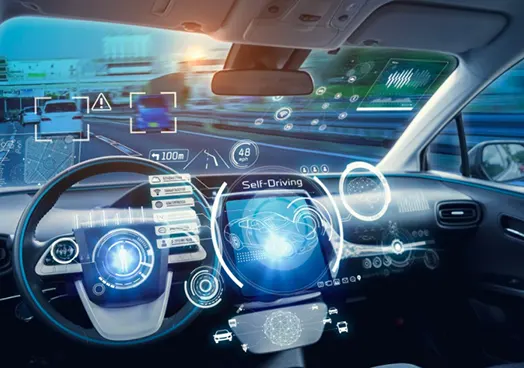
With the AI training dataset market expected to grow a whopping 22.6% over the next 10 years from $3.2 billion to $29.9 billion, according to Fact.MR, the future of vehicle research and development lies in artificial intelligence and machine learning.
And while we don’t have a crystal ball, we’ve seen that determining patterns in the data, followed by supervised fine-tuning, can lead to cleaner, greener, and longer-lasting vehicles.
If you’re looking for vehicle emissions testing equipment that pairs with your AI and ML frameworks, or if you’re just looking for a sustainability consulting firm experienced in AI and ML learning, we’re happy to help.
In the last eight years alone, we’ve collected more than 9,000 hours of reliable data for vehicle emissions testing and helped save original equipment manufacturers (OEMs) and companies more than $12,000,000 on traditional dynamometer and real driving emissions (RDE) testing using portable emissions measurement systems that pair with AI and machine learning.
To schedule a sustainability consultation, get an impact assessment, or learn more about our vehicle emissions and AI/ML solutions for your business, contact us today. We look forward to helping you create a more profitable and healthy future.
FAQ about creating a model with AI and ML model training & the process of training

1. How long does it take to train a machine learning model?
The short answer is it depends. The longer answer is that training time depends heavily on a few factors, such as the following:
- The dataset size
- Complexity of the algorithm
- Computing capacities available
For example, a logistic regression model using a dataset of a few thousand rows might train in seconds on a high-speed laptop. Nevertheless, a team of simple decision-making flowcharts built one after another with millions of rows and tons of adjustments to the machine learning model’s pre-set configuration settings before training can take hours.
What’s more, deep learning models or pretraining large language models (LLMs) can take days or weeks. The question is less about the learning rate and how long the model training process will take.
Different training models take different amounts of time.
The issue is more about how data collection, hyperparameter tuning, cleaning, and engineering affect the training itself.
2. How can manufacturers use machine learning?
Manufacturers can use reinforcement learning models and different types of machine learning algorithms & models to optimize factory operations, reduce downtime, and improve the quality of their products.
Specialists use supervised and unsupervised learning in model architecture for:
- Predictive analytics (for equipment maintenance, demand forecasting, and customer preference prediction)
- Automation of data & documentation for inventory management
- Product packaging quality inspection and assembly
- Energy efficiency optimization and product design, research, and development
- And more
For example, an original equipment manufacturer developing an AI/machine learning-based emissions model may have thousands of hours of laboratory and simulation data at their fingertips. While a model can predict emissions behavior, engineers still need real-world, ground-truth measurements to determine whether those predictions are accurate during actual vehicle operation.
High-frequency PEMS measurements provide manufacturers with synchronized emissions and vehicle-operating data, so engineers can compare the model’s predicted behavior with measured physical behavior. The result is more appropriate, useful, and actionable data for research and product development.
3. How are most AI models trained?
People train AI models through a series of phases that help hone their intelligence as a model and algorithm (pretty cool, huh?).
These models go through a series of basic phases, including:
- Unsupervised learning
- Supervised learning
- Reinforcement learning with human feedback (RLHF)
Depending on the model type, the model learns through various iterative processes through the three above-mentioned phases. With adequate training data to learn from and human oversight to fine-tune it, training an ML model — and AI and ML model development as a whole — is all about producing outputs that match the demands of the situation with which the model is confronted.
GlobalMRV: Sustainability Solutions Built On and For Artificial Intelligence and Machine Learning