


Original equipment manufacturers (OEMs) and automotive production teams: did you know that tailpipe smoke isn’t the only pollutant you should start analyzing? Yes, we’re talking about brake dust.
Recent research indicates that brake dust may affect our lungs to a greater extent than exhaust emissions.
And, with the rise of EPA-based regulations on vehicle production, staying on top of the amount of particulate matter emitted from vehicle brake production is key. Doing so helps you stay in compliance with environmental regulations and avoid hefty fines for environmental non-compliance.
Curious to know what you can do about brake dust? You’ve come to the right place.
GlobalMRV here: In this quick read, we’ll walk you through:
- What brake dust is
- How your body reacts to it
- Why it’s harmful
- What you can do about it at your production facility.
Let’s dive in.
The chemical composition of brake dust
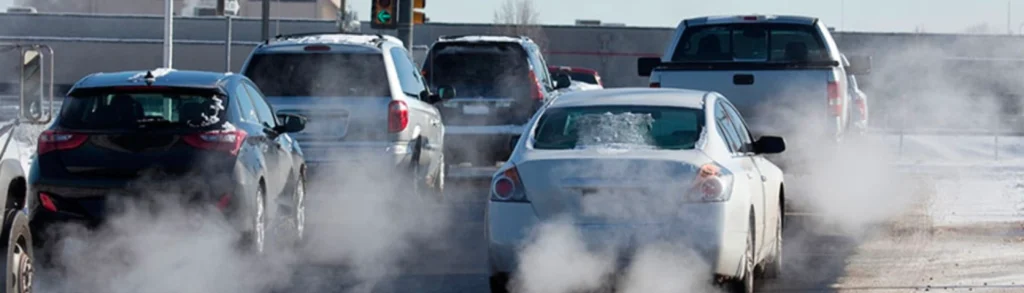
So, what exactly is in brake dust that’s so harmful?
Most brake pads are non-asbestos organic, an effort that was created years ago to rid of asbestos, a cancer-causing substance used in older brakes.
Removing cancer-causing substances may sound beneficial. Yet, today’s brake pads are made with copper, the likes of which involve using heat and friction to help cars brake.
The reason excessive copper use isn’t beneficial is that as brakes wear down, copper particles, mixed with other chemicals, can float into the air. When you breathe copper particles in, the same study mentioned above found that dust can cause inflammation in your respiratory system. When dust enters your system, breathing effectively can be challenging.
How your body reacts to brake dust
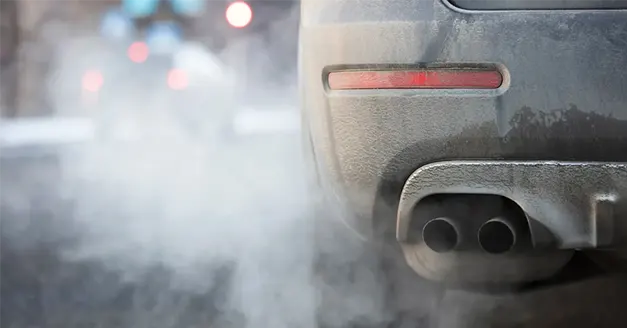
Inflammation. Yes, that’s the keyword here. Inhaling brake dust can cause inflammation.
When chronic inflammation becomes the norm, and when it’s constant due to brake dust inhalation, brake dust can slowly irritate your airways. Over time, bronchial irritation can make breathing more challenging and can negatively affect respiratory health.
When breathing becomes more challenging, conditions like asthma and bronchitis are more likely.
What’s more, both internal combustion engine-based and electric battery-powered vehicles create brake dust.
For example, regenerative braking reduces pad wear, but also means more dust circulates when brakes engage. If not to comply with environmental regulatory compliance audits, OEMS and automotive manufacturers should take the process of quantifying their environmental impact seriously. Whether from vehicles that emit brake dust or real-driving vehicle emissions that exit vehicle tailpipes, OEMs should consider the impact of brake dust.
Failing to measure, verify, and report vehicle emissions, like brake dust, can have dire consequences on businesses and public health. For example, imagine your business being fined for environmental non-compliance due to excessive brake dust being emitted into the air from your product.
Non-compliance can harm a company’s reputation and the people they serve.
As such, the need for reliable data acquisition tools is paramount to understanding the impact of brake dust on the spread of primary pollutants, product development, and respiratory health.
Why is there a need for emissions verification of brake dust?

As mentioned earlier, brake dust isn’t regulated to the extent of other primary pollutants. With the spread of brake dust, tiny copper-based particles can slip into your lungs which can cause health issues.
If you’re a business owner or product development team, the last thing you want on your plate is a health-related lawsuit because of an oversight on particulate matter that could’ve been addressed with regular emissions monitoring and reporting.
Automotive manufacturers: To keep your business and operation in compliance with regulators like the Environmental Protection Agency (EPA), verifying fine, toxic metal particles, like copper, that are produced through brake dust is a must.
So, where do you start? How do you go about verifying the composition of brake dust as it relates to vehicle emissions?
What can be done about brake dust

Original equipment manufacturers and businesses: the next time you’re building, researching, or developing equipment that requires brake pads, consider opting for brake pads that emit little to no brake dust.
Also, if a brake dust-free operation isn’t possible, consider enlisting a sustainability consulting firm to help you lower vehicle-related emissions due to brake dust. A sustainability consultant has a time-tested arsenal of emissions monitoring tools that will help keep your operation clean and in compliance with regulators.
What’s more, sustainability consultants will pin-point which parts of your operation could be optimized for environmental safety and which parts need extra attention.
Regardless, a sustainability consultant is crucial to ensuring a more profitable and environmentally-friendly operation.
Did you know?
Did you know that the Environmental Protection Agency (EPA) uses a framework to help track the environmental footprint of companies under its purview? We call this framework scope one, two, and three emissions.
Scope one emissions are direct emissions that are owned or controlled by a company, and scope two and three emissions are a consequence of a company’s activities that occur from sources that the company doesn’t own.
Scope one, two, and three emissions are a helpful way to organize and keep tabs on vehicle emissions. Currently, our team is working on developing the next generation of portable emissions measurement systems that provide real-time mass-flow emissions data on brake dust with the click of a button.
That’s right. Measuring and verifying your vehicle’s emissions is as simple as clicking a few buttons on a data acquisition system. Within minutes, you’ll have actionable data at your fingertips.
Need to measure and verify the particulates and dust emitted from your vehicle?
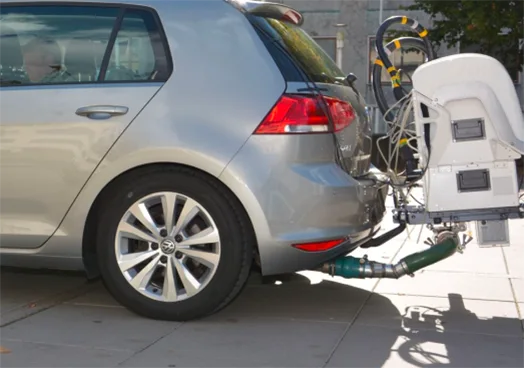
If you’re an original equipment manufacturer (OEM) or automotive product development specialist, measuring and verifying the particulate matter and dust from your vehicle’s brakes is crucial to staying in compliance.
What’s more, the release of brake dust-related regulations is imminent. We’re pivoting to meet market demand for quality emissions measurement tools by building the next generation of emissions verification devices that help measure the environmental impact of brake dust.
Nevertheless, while copper in brake pads can produce non-exhaust-based emissions, it’s still being researched. States like California and Washington have already created a testing protocol and documented analyzing heavy metals and other content in brake pads. What’s more, said legislation has since limited allowable brake pad copper content from a maximum of 5% by weight in 2021 to less than 0.5% by 2025, according to the Department of Toxic Substances Control (DTSC).
Our portable emissions measurement systems (PEMS) can measure and verify most particulate matter — and we’re building the next generation of PEMS that can help measure the environmental impact of brake dust. With more than 60 different types of diagnostic testing regimes that support over 100 different vehicles and engines, our Axion R/S and Firefly PEMS are the perfect solution for overall emissions reduction in real-driving environments.
Want to try PEMS out?
Contact us today for a risk-free trial of our Firefly or Axion R/S+ PEMS devices. We look forward to helping you create a greener, cleaner tomorrow.
Keep Your Operation in Compliance with GlobalMRV’s Sustainability Consulting Services